Showing posts with label judge. Show all posts

Sunday, November 23, 2014

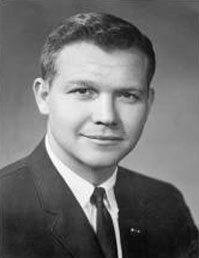
G. Harrold Carswell: representing the mediocre


When George Harrold Carswell's name was first put forward for a seat on the United States Supreme Court, some newspapers commented that his confirmation was all but assured. For one thing, he had no stocks or bonds at a time when financial conflicts of interest were affecting the high court. His decisions had not endeared him to labor groups, but observers considered their opposition to be little more than token.

The factor most in favor of Carswell's nomination, however, was the fact that the path had already been cleared for him. The Senate had already rejected President Richard Nixon's first nominee for the Supreme Court, and the chamber had not rejected a President's nominees twice in a row in 76 years. There was a perception that doing so would weaken the relationship between the President and Senate Republicans, and that it would delay decisions on important matters by leaving the Supreme Court deadlocked.

Carswell had already been confirmed by the Senate to three federal judicial posts over the course of his career. He had passed background checks by the Federal Bureau of Investigation on each these occasions. And he perfectly fit the profile for Nixon's ideal nominee: a Southern judge with a constructionist view toward the Constitution, or interpretation that the founding document limited the role of the government.

When he learned of the nominee's credentials, Attorney General John N. Mitchell enthusiastically recommended Carswell to Nixon. The judge, he declared, was to be "too good to be true." The statement was more accurate than he realized.

Carswell was born on December 22, 1919, in Irwinton, Georgia. His father, George Henry Carswell, served for 30 years as a state legislator. The elder Carswell was also secretary of state at one point and twice ran unsuccessfully in Georgia's gubernatorial elections. Carswell earned a bachelor of arts degree from Duke University in 1941 before attending the University of Georgia Law School, but suspended his studies to join the Naval Reserve after the United States entered World War II. He sailed in the Pacific aboard the heavy cruiser Baltimore and attended several universities as part of his officer training, including six months of postgraduate work at the U.S. Naval Academy. When the war ended in 1945, Carswell left the service with the rank of lieutenant.

Resuming his studies, Carswell earned a bachelor of law degree from Mercer University and graduated from the Walter F. George School of Law in 1948. He immediately started a private practice, then sought to follow in his father's footsteps by running as a Democrat for the Georgia legislature. After this bid failed, he moved his practice to Tallahassee, Florida.

Prior to the 1952 election, Carswell sought to persuade his fellow Democrats in Florida to vote for the Republican candidate, Dwight D. Eisenhower. He soon switched his allegiance to the Republican Party. After he was elected, Eisenhower rewarded Carswell by appointing him U.S. Attorney for the Northern District of Florida. Carswell held this post until March of 1958, when Eisenhower nominated him for a seat on the U.S. District Court in the Northern District of Florida. The Senate confirmed the appointment, and Carswell began serving the role the next month. He was only 33 years old, the youngest federal attorney in the country at the time. In 1969, Nixon nominated Carswell for a new seat on the U.S. Court of Appeals for the Fifth Circuit, located in New Orleans. He was confirmed by the Senate in June.

Carswell began his new job at the same time that the Supreme Court was going through an upheaval. Justice Abe Fortas of the Supreme Court had resigned in May of 1969 after it was discovered that he had a connection to a discredited financier. Fortas had agreed to perform services for the family foundation of Louis E. Wolfson, who had been convicted of stock manipulation.

Nixon's first choice to fill the vacancy left by Fortas' departure was Clement F. Haynsworth, Jr. The conservative Democrat and South Carolina judge had been serving on the Court of Appeals for the Fourth Circuit. Senators were concerned that Haynsworth had exhibited a conflict of interest in several cases where he owned stock in companies appearing before the court. Labor and civil rights groups added their voices to the opposition, saying Haynsworth had been biased against them in his decisions. On November 21, 1969, the Senate rejected the nominee with 55 senators opposed and 45 in favor; 17 of the 43 Republicans in the Senate broke ranks to vote down the President's first choice.

Unrepentant, Nixon blamed the defeat on an "anti-Southern, anti-conservative, and anti-strict constructionist" prejudice in the Senate, even though some constructionists had joined the opposition. He ordered an aide, Harry S. Dent, to "find a good federal judge farther to the South and further to the right." Carswell fit the bill, and Nixon put his name forward on January 19, 1970.

When the nomination went before the Senate Judiciary Committee, Carswell's attitude toward racial relations became an immediate point of concern. He had a distinctly mixed record on civil rights, applying Supreme Court decisions to his own district but showing less concern for equality if these precedents did not apply. In one case, he had ruled against his own barber in favor of the National Association for the Advancement of Colored People, saying the shop could not deny service to black customers. He had also decided that the Tallahassee city commissioners could not make distinctions based on race in their decisions, and Yale professor James W. Moore credited Carswell with making the University of Florida Law School free of discrimination. However, he had also dismissed cases that sought to force a theater to sell tickets to black moviegoers and reopen swimming pools closed by a "wade-in" protest. The Leadership Conference on Civil Rights, charging him with a bias against blacks making civil rights claims, had formally opposed Carswell's promotion to the Court of Appeals.

Representatives of civil rights groups expressed their concerns before the committee. They painted Carswell as a judge who was openly hostile to civil rights claims and any Northern lawyers representing them, saying he had shouted at black lawyers while acting cordial toward white ones, delayed civil rights cases without cause, and even turned his back on civil rights lawyers in the midst of their arguments. Rutgers University law professor John Lowenthal said Carswell was "extremely hostile" to a 1963 habeas corpus petition to free seven people charged with criminal trespass for urging black citizens to vote. He said Carswell had eventually granted the petition but refused to let the court marshal serve the release order, forcing Lowenthal to deliver it to the sheriff. LeRoy D. Clark, a New York University Law School professor who represented the National Conference of Black Lawyers in his appearance before the committee, declared Carswell to be "the most hostile federal district judge I've ever appeared before with respect to civil rights matters."

Statements that Carswell made in his 1948 legislative campaign raised the question of whether Carswell was being blatantly racist in this behavior. In a speech, he had endorsed segregation as "the only practical and correct way of life in our states" and further declared that he was committed to a "firm, vigorous belief in the principles of white supremacy." Surprisingly, these statements proved only a minor hurdle. Carswell denounced his former statements as "obnoxious and abhorrent to my personal philosophy" and said he had lost the race in part because he was considered too liberal in spite of such declarations. His supporters said Carswell shouldn't be judged for statements he had made 22 years before the confirmation hearings.

Carswell's record showed a high rate of reversal when it came to his decisions, especially on civil rights. A study by students at the Columbia University Law School found that 58 percent of his decisions had been overturned on appeal. Among all federal jurists, Carswell had the eighth most cases reversed by appellate courts. Supporters dismissed this finding, arguing that Carswell considered civil rights cases fairly and that the reversals came about after the high courts set precedents for the speed required in integration.

Senators opposed to Carswell also questioned whether his record qualified him for the highest judicial post in the country. At the time of his nomination, he had only been on the Circuit Court for six months. Frank Church, an Idaho Democrat, described Carswell's judicial record as "utterly pedestrian" and said that Nixon should have recommended a nominee that could meet a standard of "singular excellence." Louis Pollack, the dean of the Yale University Law School, also dealt a blow to Carswell by describing him as having "more slender credentials than any nominee for the Supreme Court put forth this century."

Despite these shortcomings, the Judiciary Committee delivered a 13-4 decision on February 16 to send the nomination to the Senate with a recommendation that Carswell be approved. The committee's majority report concluded that his record on civil rights showed him to be even-handed. Carswell's opponents were outraged. Clarence Mitchell, director of the NAACP's office in Washington, said the decision was "a kick in the teeth of those of us who have sought to quell the fires of racism among Negroes in the United States." Senator Birch Bayh Jr., an Indiana Democrat, warned that Carswell's nomination would "encourage violent extremists." Senator George S. McGovern of South Dakota, who would go on to face Nixon as the Democratic candidate in the 1972 presidential election, said of Carswell, "I find his record to be distinguished largely by two qualities: racism and mediocrity."

The opponents had taken a strategy of delaying the nomination process to allow more thorough vetting of Carswell to take place. After the Judiciary Committee's nomination, they won some extra time due to lengthy debates over amendments to the Voting Rights Act of 1970. It was enough to bring up more concerns regarding Carswell's character.

Additional racial issues surfaced. While acting as U.S. Attorney in 1956, Carswell had taken part in the transfer of a public golf club in Tallahasseewhich had received $35,000 in federal funds for its constructionto a private organization that barred black members. It was a rather transparent effort to skirt desegregation. Carswell had also signed papers incorporating a "whites only" boosters club for the Florida State University football team and sold property in 1966 with a restrictive covenant forbidding a sale to a black buyer. One paper found that in a speech to the Georgia Bar Association only two months before the nomination, Carswell had opened by saying, "I was out in the Far East a little while ago, and I ran into a dark-skinned fella. I asked him if he was from Indochina and he said, 'Naw, suh, I'se from outdo' Gawgee.'"

Carswell won significant support from his fellow judges, but it was not unanimous. Only eleven of the 15 judges on the Court of Appeals expressed their support in March. A month later, 50 of the 58 active federal district judges in the Fifth Circuit supported him. Meanwhile, thousands of lawyers and hundreds of law professors sent letters to the Senate saying they did not think Carswell was qualified for the high court. One public statement, signed by 350 practicing lawyers and law school professors, said he did "not have the legal or mental qualifications essential for service on the Supreme Court." Former Supreme Court Justice Arthur J. Goldberg admitted that he considered Carswell unfit for the post.

Some of Carswell's supporters also blundered in their embarrassing defense of the nominee. Speaking to reporters about Carswell's record, Republican Senator Roman Hruska of Nebraska sought to justify what detractors were calling a lackluster record. "Even if he were mediocre, there are a lot of mediocre judges and people and lawyers," Hruska said. "They are entitled to a little representation, aren't they, and a little chance? We can't all have Brandeises and Frankfurters and Cardozos and stuff like that there."

Senator Russell Long, a Louisiana Democrat, also advocated for Carswell in a backhanded way, saying the Supreme Court already had enough "upside-down, corkscrew thinkers." He asked, "Would it not appear that it might be well to take a B or a C student who was able to think straight, compared to one of those A students who are capable of the kind of thinking that winds up getting us a 100 percent increase in crime in this country?"

When the vote went before the full Senate on April 8, Carswell proved to be more popular than Haynsworth. However, he did not get enough support for approval. The final tally was 51 against the nominee and 45 in favor; 13 Republicans had joined 38 Democrats in the opposition. For the first time since Grover Cleveland's second term, a President's Supreme Court nominees had been rebuffed by the Senate twice in a row.

Nixon again blamed the rejection on regional bias, commenting that he didn't think the Senate would approve any Constitutional constructionist from the South. Carswell and Haynsworth had both endured "vicious assaults on their honesty and their character," he said, and he would not nominate another Southerner if it would submit him to "the kind of malicious character assassination accorded to both Judges Haynsworth and Carswell."

Critics condemned the remarks as inaccurate and indicative of Nixon's own biases. Bayh said Nixon's determination to get a Southerner in the Supreme Court was "the most damning evidence of a Southern Strategy that we've had," referencing the President's appeasing the pro-segregation groups in the South to help him win the 1968 election. Some Southern senators who had voted against Carswell also disputed Nixon's accusation, saying he could have found better constructionist nominees from the South. Nixon would subsequently nominate Harry Blackmun, a Minnesota judge on the Court of Appeals for the Eighth Circuit; he would be approved unanimously in May.

Less than two weeks after Carswell was turned down, he made a surprising decision. Though he had lifetime tenure on the Court of Appeals, he resigned on April 20 to pursue a Senate bid in the 1970 election. He had agreed to do so at the urging of Florida's Republican governor, Claude Kirk, who hoped he would take the place of retiring Democratic Senator Spessard L. Holland. Carswell said he would support Nixon's policies, agree to a withdrawal of troops from Vietnam if an "honorable settlement" could be reached, and advocate for "common sense and conservative approaches to problems of education, crime control, and fiscal matters." He also had an ax to grind with the chamber that had rejected him, saying the Senate needed "more deliberation and less ultra-liberalism."

The effort was for naught. Representative William C. Cramer defeated Carswell by a nearly two-to-one margin in the Republican primary, earning 220,553 votes to Carswell's 121,281. Cramer would ultimately lose to Lawton Chiles, the Democratic candidate whose campaign had included a lengthy hike through Florida to meet with residents across the state. Carswell resumed work as a private attorney.

Later in the 1970s, two incidents emerged suggesting that Carswell was a closeted homosexual. The first occurred in Florida in June of 1976, after vice officers staked out a men's room in a Tallahassee shopping mall following complaints from merchants that homosexual liaisons were taking place there. After meeting with a male vice officer at the mall, Carswell drove him to a wooded area north of the city. He was promptly arrested on charges of battery and attempting a lewd and lascivious act.

Carswell was briefly hospitalized for a nervous condition after the incident. He allegedly told the officers, "I'd rather be dead than in the clutches of vice officers under such circumstances. I may just kill myself tonight. This is not true. You've got it all wrong." Four months later, he pleaded no contest to the battery charge and was fined $100.

The second incident occurred in September of 1979. After meeting a man in the skating rink of an Atlanta hotel, Carswell invited him up to his room. Carswell told police that he was then attacked and struck several times with a sharp object.

Carswell continued practicing law until his death, of lung cancer, on July 13, 1992.

Sources: Biographical Directory of Federal Judges, "Floridian Picked by Nixon for Post on Supreme Court" in the Daytona Beach Morning Journal on Jan. 19 1970, "Carswell Abides by High Court Rulings" in the Sarasota Herald-Tribune on Jan. 20 1970, "Supreme Court Nominee Carswell Rejects White Supremacy Speech" in the Observer-Reporter on Jan. 22 1970, "Judge Carswell Deeply Rooted in Old South" in the Milwaukee Journal on Jan. 25 1970, "Carswell Hearings Recessed" in the Daily News on Jan. 29 1970, "Senate Panel Ends Hearing on Carswell" in the Toledo Blade on Feb. 3 1970, "Supreme Court Position Carswell Likely to Win" in the Rome News-Tribune on Feb. 8 1970, "Senate Judiciary Panel Approves Judge Carswell" in the Rome News-Tribune on Feb. 17 1970, "Carswell's Confirmation Looks Certain" in the Rome News-Tribune on Feb. 26 1970, "Goldberg Says Carswell Unfit for High Court Justice Post" in the Observer-Reporter on Mar. 23 1970, "High Court Takes a Beating in Talk About Mediocrity" in the Spokane Daily Chronicle on Mar. 25 1970, "Eleven Judges Support Carswell" in the Prescott Evening Courier on Mar. 29 1970, "Fifth Circuit Judges Back Carswell" in the Toledo Blade on April 5 1970, "Court Nominee Harrold Carswell Rejected by 51-45 Senate Vote" in The Bulletin on April 8 1970, "Nixon Charges Anti-South Bias" in the St. Petersburg Times on Apr. 10 1970, "Carswell Runs 'On Own Merit'" in the Evening Independent on Apr. 25 1970, "Harrold Carswell" in the St. Petersburg Times on Sep. 3 1970, "Faubus Loses Contest; Carswell Defeated" in the Eugene Register-Guard on Sep. 9 1970, "Carswell Returns to a Life of Private Law Practice" in the Ocala Star-Banner on Dec. 30 1970, "Carswell to Face Battery Charge, State Attorney Says" in the St. Petersburg Times on Jun. 29 1976, "Carswell Arrested on Morals Charge" in the Morning Record on Jul. 1 1976, "Carswell Reports Beating" in the Tuscaloosa News on Sept. 12 1979, "G. Harrold Carswell, High Court Nominee" in The Hour on Aug. 1 1992, "G. Harrold Carswell, 72, Rejected as Nixon's Nominee to High Court" in the Seattle Times on Aug. 1 1992, Justices, Presidents, and Senators: A History of U.S. Supreme Court Appointments from Washington to Bush II by Henry J. Abraham, The Rehnquist Choice: The Untold Story of the Nixon Appointment that Redefined the Supreme Court by John W. Dean, Encyclopedia of the United States Congress by Robert E. Dewhirst

Monday, September 24, 2012

Otto Kerner: tainted reputation

Image from msnbc.msn.com

Otto Kerner, Jr. would be far from the first politician accused of financial misconduct who fought his conviction and accused the court of besmirching his name. But when Kerner complained that the jury's finding of guilty had "deeply and irreparably tainted the good reputation that [he] cherished," he had a significant legacy to defend. Until his day in court, Kerner was best known for having delivered one of the most progressive opinions on race relations by the United States government.

Born in Chicago in August of 1908, Kerner earned a bachelor's degree from Brown University in 1930, attended Trinity College at Cambridge University in England from 1930 to 1931, and earned a Juris Doctorate from the Northwestern University School of Law in 1934. He enlisted in the National Guard after graduation and transferred to field artillery two years later. With the outbreak of World War II, he served in both the European and Pacific theaters. When he retired from the service in 1954, Kerner was a major general with a Soldier's Medal, Bronze Star, and Army Commendation Ribbon.

Kerner entered politics soon after, becoming the U.S. District Attorney for the Northern District of Illinois. He held this position from 1947 to 1955 before serving as a Cook County judge from 1955 to 1960. During his time in these positions, Kerner led an effort to reform adoption procedures. Running on the Democratic ticket, Kerner was elected governor of Illinois in 1960. He was re-elected four years later. Kerner served on the National Governors' Conference Executive Committee from 1967 to 1968, and he chaired the Midwestern Governors' Conference that same year. There was a minor scandal in December of 1964 when Theodore J. Isaacs, Kerner's former campaign manager, was charged with misconduct and conspiracy for allegedly receiving fees from two envelope companies. The charges blew over, but it wouldn't be the last time that Isaacs appeared before a judge.

Kerner was perhaps best known for his role as chairman of an 11-member bipartisan committee convened in the summer of 1967 by President Lyndon B. Johnson. A series of devastating race riots had broken out across the country in recent years, and Johnson wanted to know why. Officially known as the National Advisory Commission on Civil Disorders, the group was nicknamed the "Kerner Commission" due to Kerner's leadership role and progressive record as the Illinois governor; he had worked to integrate the National Guard, and although Chicago had not been exempt from the riots the disruptions had been much less severe than those in Detroit and elsewhere. For several months, the committee members met with civic leaders, police officers, politicians, and social scientists to discuss the racial situation in the country.

The result was a groundbreaking report in March of 1968 identifying a number of deep-seated problems and recommending several sweeping reforms. It confirmed the assertions of many civil rights leaders and was a general indictment of the degradation of race relations, blaming "white racism" as the crux of the problem. The report also said racism had become institutionalized, with racist policies not only leading to the creation of black ghettos but keeping them intact and rationalizing their existence. As a result, black citizens had poorer access to education and health facilities and were more susceptible to poverty and unemployment than white citizens. The report also accused police departments of having confrontational tactics when policing the ghettos and contributing to the severity of the riots by responding too slowly to the disruptions. Some members of the media were accused of being irresponsible in reports that could "seed the thoughts of riots."

The findings included the ominous finding that "our nation is moving toward two societies, one black, one white - separate and unequal." It recommended an immediate effort to improve ghetto conditions by better access to jobs and housing, including 550,000 new jobs and 600,000 new housing units in 1968 alone. Members also suggested a need for welfare reform, guaranteed income for every American family, and full-year schooling for children. Shortly before it disbanded, the commission released a supplemental report in July of 1968 saying more ghetto residents than expected - 18 percent - had joined in the riots and that the participants were not just criminals or "riff-raff" but a large number of urban youth.

This secondary report was likely in response to a complaint accusing the commission of not placing responsibility for the riots on the rioters themselves. Richard Nixon, running on a "law and order" platform in 1968, accused the Kerner Commission report of blaming "everybody for the riots except the perpetrators." The report may have illuminated a number of issues, but the scale of the recommendations (and belief that the riots were more the fault of conspirators than a release of outrage about social conditions) meant that it did little else.

A year after the release of the report, an independent study by the nonprofit organizations Urban America Inc. and The Urban Coalition found that little progress had been made in race relations. It borrowed a line from the Kerner Commission in concluding, "A year later we are a year closer to being two societies, black and white, increasingly separate and scarcely less unequal." Testifying before a Senate Judiciary subcommittee in May of 1971, Kerner said he thought police tactics had improved since the riots but that underlying racial issues had not been addressed.

Kerner decided not to run for a third term due to a "deep concern for the health and happiness" of his family." He resigned his governorship early, handing over the reins to Lieutenant Governor Samuel Shapiro in May of 1968. However, Kerner soon accepted a presidential appointment as a federal appeals court judge in Chicago.

In December of 1969, an investigation began into the allegation that Kerner received $50,000 in bank stock shortly before ordering the dismissal of a second indictment against organized crime figure Joseph Amabile, who had been sentenced to 15 years in prison on extortion conviction. Although nothing came of this inquiry, Kerner would land in hot water less than two years late on a similar accusation.

In July of 1971, investigators questioned Kerner about a hefty profit he made in racetrack stock while serving as governor. Five months later, a federal grand jury indicted him on charges of bribery, mail fraud, tax evasion, perjury, and conspiracy. The jury also indicted three former administration officials and one of their secretaries: Isaacs, who had served as state director of revenue between 1961 and 1963; William S. Miller, chairman of Illinois Racing Board from 1961 to 1967; Joseph Knight, director of state institutions between 1962 and 1968; and Faith McInturf, Miller's former secretary and business associate.

The charges alleged that Kerner conspired to acquire $356,000 in racetrack stock for the bargain price of $70,158, and that this amounted to a bribe since it intended to influence his decisions on horse racing matters. Prosecutors also charged that Kerner evaded $84,129 in taxes by false reports to the Internal Revenue Service.

Kerner promptly took leave of his post but did not resign. The case zeroed in on him and Isaacs, since Knight was too old and ill to stand trial and the charges against McInturf eventually evaporated. The state dropped the charges against Miller when he agreed to testify against his co-defendants.

The trial against Kerner and Isaacs began in January of 1971 and lasted for seven weeks; the state called 40 witnesses, the defense 31. Majorie Everett, a former head of Chicago Thoroughbred Enterprises, said she made stock available to Kerner and Isaacs in 1962 and contributed $45,000 to the governor's campaign. Miller said Kerner knew the contributions were made with the intent that he would favor Everett's interests with his decisions; he said Kerner accepted simply by saying, "Well, that's very nice of Marj." The government also asserted that Kerner and Isaacs went through a complex system of hiding the assets and avoiding taxes on them. On the stand, Kerner denied that he ever interpreted the stock and contribution as a bribe.

The jury disagreed; they found Kerner guilty of a total of 17 charges and Isaacs guilty of 15. It was the first time a sitting federal judge was convicted of criminal charges. Kerner vowed to fight the conviction and refused to give up his post, meaning he could only be removed by impeachment. In April of 1973, he and Isaacs were each sentenced to three years in prison and a $20,000 fine. Kerner complained, "My real punishment, deserved or not, has already been inflicted...I was never tainted, and I was never bought."

His argument about the interpretation of the stock and campaign donation held some merit during the appeals process. An appeals court agreed to dismiss the bribery charge, but upheld the other convictions. In June of 1974, the Supreme Court denied a review of the cases; Kerner's argument, in part, was that he could not be indicted while a sitting judge. Some members of Congress were getting tired of this particular ambiguity. In July, Kerner finally resigned from the judge's position as efforts to impeach him gained momentum. He started serving his sentence the same month.

Kerner remained imprisoned until March of 1975. By that time, his health had declined precipitously. Although he had kicked the habit, Kerner had formerly been a longtime smoker; surgeons removed a tumor from his lung and gave him a 50-50 chance of survival. Kerner's poor health sped up his release from prison, and he accepted a job consulting with Lewis University-Chicago's special services center to improve the mental attitudes of prisoners.

President Gerald Ford received a request to pardon Kerner in October of 1975, but rejected it. Kerner was again under consideration for a pardon in May of 1976, but was already fighting a losing battle against resurgent lung cancer at this point. He died the same month and, due to his military service, was buried with honors at Arlington National Cemetery.


Sources: National Governors Association, "Advisers Map Plans to Fight Discrimination" in the Ocala Star-Banner on May 30 1963, "Wild Scene as Governor Orders Illinois Adjournment" in the Telegraph-Herald on Jun. 27 1963, "Nine Public Officials Indicted on Charges of Malfeasance" in the Reading Eagle on Dec.17 1964, "Illinois Governor to Quit Politics" in the Spokane Daily Chronicle on Feb. 7 1968, "Anti-Riot Panel Urges Major National Effort" in the Beaver County Times on Mar. 4 1968, "Armed Cops Not Answer - Kerner" in the Pittsburgh Post-Gazette on Mar. 13 1968, "Riot Commission Calls For Action on Report" in the St. Petersburg Times on Apr. 10 1968, "Illinois Governor Resigns" in the Press-Courier on May 21 1968, "Riot Commission Report is Challenged" in the Sumter Daily Item on July 27 1968, "One Year Later: The Nation Still Drifts Toward a Racial Upheaval" in the Lewiston Morning Tribune on Mar. 2 1969, "Kerner Silent on Charge" in the Southeast Missourian on Dec. 3 1969, "Judge Kerner Testifies For Senate Group" in the Gettysburg Times on May 26 1971, "Kerner Gain in Racetrack Stock Cited" in the Milwaukee Sentinel on Jul. 30 1971, "U.S. Jury Indicts Judge Kerner" in the Milwaukee Sentinel on Dec. 16 1971, "Kerner Pledges Battle to Erase Conviction" in the Toledo Blade on Feb. 20 1973, "Indictments Against Miller, Aide Dropped" in the Chicago Tribune on Mar. 3 1973, "Kerner Gets Three Years, $50,000 Fine" in the Ellensburg Daily Record on Apr. 20 1973, "Kerner Free of Bribery Conviction" in the Pittsburgh Post-Gazette on Feb. 20 1974, "Kerner: Honor Dearer Than Life" in the Ellensburg Daily Record on Feb. 20 1974, "High Court Refuses to Review Kerner Case" in the Portsmouth Times on Jun. 17 1974, "Kerner Quits Bench, Faces Prison Term" in the Beaver County Times on Jul. 25 1974, "Lung Tumor Removed From Former Governor" in the Beaver County Times on Mar. 12 1975, "Kerner to Work With Inmates" in the Free Lance-Star on May 22 1975, "Ford Reject Pardon for Former Governor" in the Virgin Islands Daily News on Oct.18 1975, "Pardon Eyed For Kerner" in the Spokesman-Review on May 7 1976, "Otto Kerner Dies; Paroled Year Ago" in the Schenectady Gazette on May 10 1976, Encyclopedia of American Race Riots edited by Walter C. Rucker and James N. Upton, Crime and Punishment: A History of the Criminal Justice System by Mitchel P. Roth

Sunday, February 12, 2012

John Milton Elliott: the most ignominious game

Image from kaintuckeean.com

The fact that John Milton Elliott's defection from the United States during the Civil War did not negatively affect his life after the conflict shows just how common such actions were. Rather, Elliott is another politician best known for his dramatic and tragic end.

Elliott was born in Scott County, Virginia in May 1820. He moved to Morgan County (now renamed for Elliott) in Kentucky. He returned to Virginia to attend Emory and Henry College in Emory, graduating in 1841. From there, he studied law, was admitted to the bar in 1843, and began a practice in Prestonburg, Kentucky.

In 1847, Elliott became a member of the state's house of representatives. Five years later, he was elected as a Democrat to the House of Representatives. He was re-elected twice and chose not to run for re-election in 1858. Upon his departure, he returned to his legal practice and again joined the state house of representatives in 1861. Elliott initially favored neutrality in the split between the Union and Confederacy after several southern states seceded, but his sympathies were clearly with the states just south of Kentucky. He occasionally purchased a slave, denounced the abolitionist movement, and was a member of Kentucky's Southern Rights party.

After the close of the fall session of the house of representatives, Elliott began organizing support for the Confederacy in eastern Kentucky. The activity did not go unnoticed, and the U.S. District Court returned an indictment charging him with treason for "directly or indirectly giving aid and comfort to the enemy." In December of 1861, Elliott was one of eight members of the Kentucky General Assembly expelled for the same cause. He joined the convention at Russellville organizing the Kentucky representatives to the Confederate government, and was elected to both the First and Second Confederate Congresses.

After the war, the Fourteenth Amendment barred anyone who had previously sworn an oath to the United States Constitution and joined an insurrection or rebellion against it from holding office unless there was a two-thirds vote allowing it. The provision effectively ended Elliott's political career, but he was able to return to a successful legal career. He settled in Owingsville, and later Catlettsburg. From 1868 to 1874, he served as a circuit court judge. Starting in 1876, he was a judge of the court of appeals.

This line of work would effectively seal Elliott's fate. The sister of one Col. Thomas Buford had purchased a farm from a Mr. Guthrie, but managed to pay off only one of three notes. Guthrie began foreclosure proceedings against her in 1871. He won the suit, but Buford argued that the title was defective and the ruling was reversed on a technicality in the appeals court. Guthrie pressed the foreclosure and won again, meaning Buford's sister lost both her property and her $20,000 investment. In 1878, Elliott affirmed the decision after Buford again appealed.

By the time the final decision was made, Buford's sister had died. He directly blamed the court for her death, and bore a grudge against both Judge Pryor, who had made the initial decision against him, and Elliott. Buford later said he bore no personal grudge against Elliott, but rather had been enraged when the judge came over after Pryor's decision and said, "Colonel, I did the best I could for you." Buford considered this to be an insincere statement. "He had given the original decision against me; he had concurred in this one and although he did not pronounce it, I had means of knowing that he was the moving spirit and engineer of it all through," Buford accused. He frequently stopped by the Capitol Hotel, where both Pryor and Elliott boarded, to shout threats up to them. At one point, the sheriff tried to serve eviction papers on Buford but quickly withdrew when he found that the farm had been heavily fortified to ward off such attempts.

In March of 1879, Buford sought his revenge. His primary target was Pryor, but he said he decided against killing the judge because he had children. He would not have been able to find Pryor in any case, since he had accepted a friend's drink invitation and was not at the hotel; doubtful about Buford's proclamation that he had decided against killing him, Pryor would tell people for years afterward that the drink had saved his life. Buford went after another judge as well, but couldn't persuade him to leave his breakfast to see him.

Finally, Buford found Elliott in front of the Capitol Hotel with another judge. Buford had been wandering through the town carrying a shotgun loaded with buckshot, but this did not raise any concerns. In fact, Buford was wearing his hunting gear and asked Elliott if he wanted to go snipe hunting. Elliott declined, and Buford persisted by asking Elliott to go out for a drink with him. Elliott refused this offer as well. The other judge turned away for a moment and heard a gunshot. When he turned back, he saw that Elliott had collapsed. He died soon after.

Buford readily confessed that the shooting was no accident and showed no remorse, calling Elliott "the most ignominious game my gun ever killed." He added that he killed Elliott "to try my case, to show that they could not rob and assassinate with impunity." The murder itself shocked the state. Governor James B. McCreary declared that state offices would be closed at noon the day after Elliott's death as a token of respect, and ordered all state officers and clerks to attend the funeral. The New York Times wrote, "No man among all the popular elements of his district enjoyed such real and universal esteem." Later, Elliott would have a statue dedicated to his memory at the Boyd County Courthouse in Calettsburg.

Elliott went to trial in July of 1879. There was little chance of disproving that Buford had shot Elliott, and there was no attempt to do so by the defense. Rather, 45 witnesses took the stand to testify that Elliott was insane. The jury found Buford guilty and sentenced him to life in prison. A second trial took place on appeal in 1881, and on this occasion he was found not guilty by reason of insanity. Buford was sent to an asylum, although he soon escaped and made his way to Indiana. He stayed there for two years before voluntarily returning to the asylum, dying there in February of 1885.

Elliott's murder also helped contribute to the death of General Abe Buford II, Thomas's brother. Renowned as a horse breeder and veteran of the Mexican War and Civil War (on the Confederate side), Abe bankrupted himself paying for Thomas's defense. In 1884, he committed suicide, leaving behind a note that said in part, "My financial troubles have driven me to despair. Have lost my only chance to relieve my unfortunate brother and self, and the future is too dark for me to struggle against any further."

Sources: The Biographical Directory of the United States Congress, The Political Graveyard, "Members of the Legislature Expelled" in the New York Times on Dec. 24 1861, "The Record of Murder" in the New York Times on March 27 1879, "A Chivalrous Murderer" in the New York Times on Jul. 20 1879, "Abe Buford's Suicide" in the Reading Eagle on Jun. 10 1884, Lawyers and Lawmakers of Kentucky edited by H. Levin, American Law Review Vol. 54, Famous Kentucky Tragedies and Trials by Lewis Franklin Johnson, A New History of Kentucky by Lowell H. Harrison and James C. Klotter, The Kentucky Encyclopedia edited by John E. Kleber

Thursday, July 2, 2009

Page Morris: hit and run

Image Unavailable

Robert Page Walter Morris, more commonly known as either Page Morris or Robert P. Morris, might well be the least scandalous figure to appear on this blog so far. With a long career as a teacher, lawyer, congressman, and judge, Morris was never implicated in any crime or official misconduct. However, his position did earn him more attention for an incident later in his life than he would have otherwise received.

Morris was born in Lynchburg, Virginia in 1853. He attended the College of William and Mary and graduated from the Virginia Military Institute in 1872. He stayed at the school to become an assistant professor of mathematics for a year, then moved on to teach mathematics at the Texas Military Institute from 1873 to 1876. Morris also became a professor of applied mathematics at the Agricultural and Mechanical College of Texas from 1876 to 1879.

At some point, Morris turned his attention to law, and he was admitted to the bar in 1880. He returned to his hometown to open a private practice. Morris made his first attempt at office in 1884, running for the House of Representatives in 1884 as a Republican, but was unsuccessful. He moved to Duluth, Minnesota, in 1886 and three years later became a municipal judge in that city. In 1894, he became city attorney, and in 1895 he was appointed district judge of Minnesota's 11th district. He resigned this position the next year, when he was elected to the House of Representatives.

Morris won the next two elections as well before declining to run for renomination in 1902. His most notable achievement came in his last term, when he introduced a bill that came to be known as the Morris Bill. The Nelson Act of 1889 had sought to relocate Indians living in Minnesota and take control of the vacated lands. By the turn of the century, the Chippewa Indians had ceded some three million acres to the federal government. However, the government had advanced more money than it had received from timber sales, and so the Indian treasury (overseen by the government) was in deficit. The main problem with the Nelson Act was that it allowed for widespread fraud to take place in the timber sales, thus reducing the amount of money that went into the government coffers.

The Morris Bill sought to prevent such fraud by having the government take on the supervision and logging responsibilities. It changed the measure of timber sales to the quantity after a cut, as opposed to the previous method where the timber was estimated and sold based on the stumps. The bill also had the pine sold by sealed rather than open bid, eliminated a section on dead and downed wood, and created a 225,000-acre forest reserve that was the basis for the Chippewa National Forest. The bill was passed into law in 1902, and one estimate said two to three times as much money would go toward the Indian treasury under the new system.

In February of 1903, one month after Morris left Congress, he was nominated by President Theodore Roosevelt to be U.S. District Court judge for Minnesota. The Senate confirmed the appointment the next month. Morris would hold the position for the next 20 years, occasionally handling cases that showed up on the national scene. In one, he sentenced a man who had sent a threatening letter to Roosevelt to a year in prison; the man said he had been under the influence of cocaine at the time.

Morris himself became the subject of the news in October of 1921. The New York Times reported that he had been sitting in Salt Lake City, Utah around that time; however, he had made his way over to California for some reason. There, in Pasadena, Morris accidentally struck a pedestrian named Elizabeth Holmes with his vehicle. Luckily, Holmes was only slightly injured, but Morris only stopped after motorcycle officers had given chase for seven blocks.

Morris was arrested for failing to stop and render assistance to Holmes, and pleaded not guilty to a charge of reckless driving. A trial was set for November, but Holmes ultimately admitted to a reduced charge of failing to give a traffic signal. He avoided jail and paid a $10 fine.

The accident did not affect Morris's appointment as federal judge, but by April of 1922 he had announced that he would be retiring. He did so in 1923, relocating to Pasadena. In 1924, he died in Rochester, Minnesota.

Sources: The Biographical Directory of the United States Congress, The Federal Judicial Center, "A Year For Threatening Roosevelt" in the New York Times on Apr. 7 1905, "Federal Judge Arrested" in the New York Times on Oct. 21 1921, "Accuses Judge of Reckless Driving" in the New York Times on Oct. 22 1921, "Judge Fined in Minnesota" in the New York Times on Nov. 27 1921, Forestry and Irrigation for January 1906 by the American Forestry Association, Law Notes for April 1922 published by the Edward Thompson Company, The White Pine Industry in Minnesota: A History by Agnes M. Larson

Saturday, November 29, 2008

John Swainson: post-gubernatorial perjury


Photo from nndb.com

John Burley Swainson was born in Canada in 1925 and came to Michigan with his family when he was two years old. He fought with the 95th Infantry Division of the United States Army during World War II, losing both his legs to a land mine explosion in France in 1944. After earning his law degree in 1951, Swainson was elected as a Democrat to the state senate and served there from 1954 to 1958, as Lieutenant Governor from 1958 and 1961, and as Governor from 1961 to 1963 after his election in 1960. He was defeated in the 1962 election by Republican candidate George Wilcken Romney (father of future Massachusetts Governor Mitt Romney).

After leaving office, Swainson served as a circuit court judge and State Supreme Court justice, the latter from 1971 to 1975. It was in 1975 that Swainson was accused of bribery conspiracy and perjury after John J. Whalen, a burglar convicted in 1970, said he had arranged for a $20,000 bribe for Swainson to influence other high justices to order a new trial. Whalen brought these accusations to the attention of the Federal Bureau of Investigation in 1972, and even carried a concealed microphone while meeting with Harvey Wish, a bail bondsman also indicted in the incident and later convicted of bribery conspiracy. Wish was accused of being the intermediary through which the bribe would be funneled to Swainson. Though Swainson was cleared of the bribery charge, he was found guilty by a jury on November 23, 1975 of three counts of perjury. He served 60 days in a minimum security prison, and lost his law license for a time. The U.S. Court of Appeals upheld the conviction after Swainson appealed on the argument that the taped conversations between Whalen and Wish had influenced the jury's decision.

Whalen, who had begun informing the FBI on other matters including a Detroit fencing operation in which 13 people were arrested, had a rather rough time of things after Swainson's trial. Arsonists destroyed his home less than a week after the verdict, and in December of 1975 he was kidnapped, tortured, and shot by two men; he lived to tell the tale.

Swainson later became the president of the Michigan Historical Commission, a title which he held until his death of a heart attack in 1994. Two years later, the Commission established the Governor John B. Swainson Award to recognize "state, county, or municipal employees who have contributed to the preservation of Michigan history even though such activities are not part of their primary job responsibility."

Sources: National Governors Association, "Swainson Indicted" in Time Magazine on July 14 1975, "Justice Convicted of Lying to Jury" in the Daily Collegian on Nov. 3 1975, "Home of Witness Burns" in the Daily Collegian on Nov. 7 1975, "Key Witness in Michigan Case Kidnapped, Tortured, and Shot" in the New York Times on Dec. 20 1975, "John Swainson, 68, Michigan Governor and Perjured Judge" in the New York Times on May 16 1994, United States of America v. John B. Swainson, michigan.gov