Showing posts with label disappearance. Show all posts

Saturday, April 3, 2010

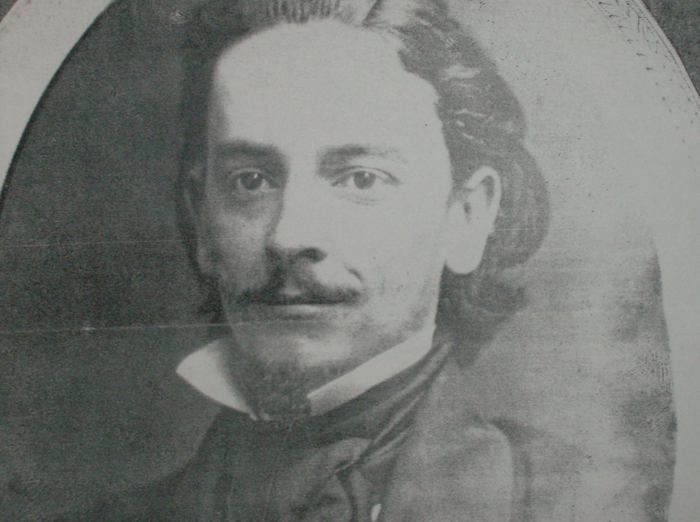
Marshall Tate Polk: almost south of the border

Image from findagrave.com

The conclusion of the attempted flight of Marshall Tate Polk Jr. from the country sounds like it could have inspired a Wild West movie. Running from charges that he'd stolen funds from Tennessee while acting as the state's treasurer, Polk wound up on a train making its way through Texas. The conductor of his sleeping coach happened to recognize him from the notices posted along his likely route. Once Polk got off at a station, the conductor disembarked as well, gathered a companion, and told another person to contact the authorities. The conductor then took off after Polk, who had left with his servant on horseback.

The conductor and his friend gave chase. Somewhere in the Texas scrub, the conductor managed to get the drop on Polk, stepping out from behind a bush to confront him. Both Polk and his servant pulled their revolvers on the intruder, but the conductor remained steadfast. He warned that the surrounding countryside was crawling with rangers. "Put up your guns, or I'll have your heads blown over into Mexico," the man warned. Sufficiently intimidated, both Polk and his servant handed over their weapons. It was a bold maneuver, and one that paid off well. The conductor had been unarmed until the two men surrendered their guns, and he and his companion promptly used the revolvers to hold the two men until the rangers actually arrived.

Most of these details come from a New York Times article featuring the conductor's story, so it is quite possible that the trainman chose to embellish the details. The underlying facts are sound, however. Suspected of embezzling hundreds of thousands of dollars in state funds, Polk had been riding the rails through Texas. And he was indeed captured not far from the Rio Grande while fleeing with his servant on horseback.

Marshall Polk, who sometimes went by the abbreviated name M.T. Polk, was also somewhat notable due to his relationship to a former President. Polk's father died about a month before he was born in Morgantown, North Carolina, in May of 1831. His uncle, James Knox Polk, was a U.S. Representative from Tennessee at the time, and he took his nephew under his wing; this elder Polk would go on to be the Governor of Tennessee and eleventh President of the United States.

Marshall Polk attended Georgetown University, and graduated from West Point in 1852. He joined the Confederate army during the Civil War as a captain of artillery, and was seriously wounded at Shiloh. The injuries were bad enough that he had to have a leg amputated, but he remained in the service and was promoted to colonel, serving on the staff of General Leonidas Polk (presumably another relative). After the war, Marshall Polk lived on a farm near Bolivar, Tennessee and published the Bolivar Bulletin. He first entered the political field in 1876 by attending the Democratic National Convention as a delegate, and the next year he began serving the first of three terms as Tennessee state treasurer.

It was later determined that Polk had been embezzling for five of his six years in office. The action most cited after the discovery of this crime was the One Hundred and Three Funding Bill to settle the state debt. Polk was given $600,000 to pay interest on the bill, but left in possession of the money after an injunction was started and the bill declared unconstitutional. It was also mentioned that Polk had another $400,000 under his control when the actions regarding the bill took place. As a customary inspection was about to take place in January of 1883, Polk quietly disappeared from the state. The study found that hundreds of thousands of dollars were missing, mostly due to the lack of caution in the banks where the state funds were deposited. Polk had managed to deposit several checks, despite the fact that they lacked the signature of the state controller. With this lack of oversight, it wasn't difficult for the treasurer to withdraw the funds for his own personal use.

When it became clear that Polk had absconded from the state, the Tennessee house of representatives considered offering a $20,000 reward for his capture. That idea fell through after one legislator said the treasurer had nothing with which to repay the state, and so the reward would only add to the financial burden caused by the embezzlement. Polk's bond was good for $100,000, something of a small amount considering the amount of money he had control over. There had been a proposal in the legislature to increase the bond, but the bill had been stolen from the desk of the state senate clerk the day before it was supposed to go to a final vote. In the wake of the embezzlement, the legislature resolved to seize Polk's assets and thoroughly examine the state's books to find if anyone else was involved in the theft. In the midst of the upheaval, reform proposals come fast and heavy in the legislature. They included suggestions to increase treasurer's bond to $500,000 and have the treasurer make a monthly report to the Governor, controller, and secretary. Another proposal would have the treasurer deposit funds in banks with sufficient bond coverage within three days of receiving them, with the checks countersigned by the Governor and controller and marked to show what they would be used for.

Captain James Fleming, Polk's clerk and bookkeeper, helped investigators determine how the money went missing. One popular suggestion was that Polk had diverted considerable funds to political allies, and newspaper reports anticipated further criminal charges. Despite his cooperation, Fleming was arrested the next year as he was tried to leave the state. He was accused of making false entries totaling $40,000 on behalf of Polk, but the case faded from the public eye soon after. It seems no other potential co-conspirators, estimated to number about half a dozen when the scandal first broke, were charged. "Throughout the city in circles where Mr. Polk was known and liked for his generosity, there is universal regret at his disgrace which has come upon him, and perhaps no man's fall was ever more generally regretted," the New York Times declared.

Polk's point of destination was more obvious than that of the Kentucky treasurer who shared one of his names and would take flight five years later. Mexico not only contained a silver mine owned by the treasurer, but also had no extradition policy with the United States. Warrants of arrest were sent to cities along his probable escape route. Polk's wooden leg would provide a ready clue for law enforcement authorities. Five days after his departure on January 2, it was announced that he had been arrested in San Antonio, Texas by a Pinkerton detective.

Much to the horror of authorities and citizens in Tennessee, Polk got away again. The one-legged man claimed he was not Polk, but his cover story wasn't exactly convincing. He gave his name as "Tate" and said he was simply a wealthy man going to look over his mining interests. Outgoing Democratic Texas Governor Oran M. Roberts said he had no authority to hold Polk unless someone made a charge against him while under oath, and the detective said he had no authority to hold the man. When Polk was finally arrested again, about 18 miles shy of the Rio Grande, the detaining marshal suggested that the treasurer had paid off the Pinkerton detective. At the time of his arrest, Polk had several state checks with him.

As Polk was being returned to Nashville, the legislature appointed attorney Atha Thomas as a replacement on the 22nd ballot. Polk told reporters on his arrival that several reports about his journey were false, including allegations that he had been drinking heavily the entire time. He also seems to have tripped over his words, saying both that he was taking a routine trip to Mexico to check up on the mine and that he intended to raise the defaulted money in order to repay the state in full. The same month that saw Polk's defalcation revealed and his subsequent dash for the border also brought his indictment, which charged that he acquired $484,000 from the state treasury through embezzlement and larceny.

An investigation determined that by 1878, about a year into his job, Polk was defaulting $20,000 to $40,000. By April of 1882, the amount was up to $216,520. The probe blasted the banks involved in the case, since they had extended false credit to Polk. In doing so, committee members determined, the banks had failed to stop the embezzlement when they could have staunched the loss at only $200,000. The banks had honored several checks not countersigned by the state controller, and Polk had distributed the money in several ventures. These included $50,000 for the silver mine, $10,000 to the Nashville American publishing company, and investments in North Carolina lumber and Alabama iron. He also loaned money to Democratic politicians.

Fortunately, Polk's theft was softened by both the attachments against his property and $150,000 which was legitimately owed to him by various people. In February of 1883, his friends proposed a payment schedule to free Polk and the state from debt, but it came to naught. The next month, however, the legislature passed an act allowing settlement. It said Polk could pay $100,000 on genuine bonds and another $150,000 on internal improvement bonds. When paid, the sureties against his property would be relieved. The act specifically stated that the settlement would not absolve him from criminal prosecution. By late June, Polk's friends had paid $75,000 toward the settlement, and there were rumors that the prosecution could be dropped. However, Polk had been arrested again only the month before. He had been granted release due to health reasons, but a $20,000 bond he had given was found to be insufficient and he was suspected of making another run for it.

Polk's trial began in June of 1883. The case was well-known enough that over a thousand people were rejected for jury duty, since they knew all about the matter. A panel was finally assembled from 12 illiterate country bumpkins. An Iowa newspaper, the Carroll Herald, clearly clearly took exception to the claim that an intelligent body had been chosen. "Tennessee has about as much reason to be proud of this phenomenal jury as of the criminal it is to try," the article sniffed. It didn't matter much in the end, as the entire jury was dismissed and a new one assembled before the trial was through. There were lingering concerns about the ability of the jurors to fairly hear the case, with one member in particular having been employed by the widow of former President Polk.

Defense attorneys argued that Polk was only guilty of "default of pay." They said large deficits against the treasurer were common enough, and could be explained through legal reasons consistent with the treasurer's duties. They added that $50,000 had already been put into the state via sureties, with another $10,000 on the way and significant sums available through the sale of the silver mine and lumber interests. The lawyers said the jurors needed to give the ex-treasurer a chance to make good the defalcation. "If he has got that money in his pocket, you can't send him to prison without first giving him a chance to pay it," they said. "He cannot be accused of refusing to pay when no one has demanded of him to pay." The jury agreed with the prosecution's assessment that Polk's actions were embezzlement through and through. He was found guilty in July, and sentenced to serve 20 years in prison with a fine equal to the amount stolen.

In February of 1884, the New York Times reported that his sentence was only 13 years; this may have been a result of an appeal or an error on the paper's part. It added that his mining interests in Mexico had been sold for $2 million, and that his health was very poor. Two days after the article was published, with an appeal set to go before the Supreme Court, Polk died of heart disease in Bolivar, Tennessee. Even this latest development was in doubt, at least in some circles. In 1887, a report claimed that Polk may have faked his death. An Alabama citizen returned from Mexico, saying he had met Polk there. The item apparently did not gain much credibility, and it was not considered any further.

Sources: The Political Graveyard, "A Deficit In Tennessee" in the New York Times on Jan. 6 1883, "Empty Vaults" in the Aurora Daily News on Jan. 6 1883, "Polk Still A Fugitive" in the New York Times on Jan. 7 1883, "Treasurer Polk Arrested" in the New York Times on Jan. 8 1883, "Treasurer Polk Escapes" in the New York Times on Jan. 9 1883, "Treasurer Polk Recaptured" in the New York Times on Jan. 10 1883, "Treasurer Polk's Recapture" in the New York Times on Jan. 13 1883, "Some Of Polk's Methods" in the New York Times on Jan. 13 1883, "Ex-Treasurer Polk Indicted" in the Reading Eagle on Jan. 14 1883, "How The Conductor Captured Polk" in the New York Times on Jan. 15 1883, "Ex-Treasurer Polk's Friends" in the New York Times on Feb. 22 1883, "Settling With Polk" in the New York Times on Mar. 24 1883, "M.T. Polk Again In Jail" in the New York Times on May 4 1883, "Polk's Case To Be Called" in the New York Times on Jun. 25 1883, "Marsh T. Polk On Trial" in the New York Times on Jun. 27 1883, "A New Jury To Try Polk" in the New York Times on Jul. 4 1883, "Polk On Trial" in the New York Times on Jul. 16 1883, "The Polk Trial" in the New York Times on Jul. 22 1883, "Was It A Farce?" in the New York Times on Jul. 23 1883, untitled brief in the Carroll Herald on Jul. 25 1883, "Ex-Treasurer Polk, Of Tennessee" in the New York Times on Feb. 27 1884, "Death of Ex-Treasurer Polk" in the New York Times on Mar. 1 1884, "Mr. Polk Is Living" in the Meriden Daily Republican on Sep. 6 1887, The Banker's Magazine and Statistical Register Volume 37, James K. Polk: A Biographical Companion by Mark Eaton Byrnes

Thursday, April 2, 2009

Caleb Lyon: the great train robbery

Image from lincolnbicentennial.idaho.gov

Proving a capable politician on both sides of the country, Caleb Lyon was condemned to besmirched obscurity after an unsuccessful junket on the frontier.

Born in Lyonsdale, New York in 1822, Lyon graduated from Norwich University in Northfield, Vermont in 1841. Six years later, he was appointed as the U.S. consul to Shanghai, before traveling to South America and thence to California. There, he became a member of the California constitutional convention and designed a state seal.

Lyon went against the gold rush tide, returning in 1849 to New York. He was elected to the state assembly in 1850, but resigned after encountering opposition to enlarging the Erie Canal, a project he supported. In 1851, he served in the state senate, and was elected to the U.S. Congress as an independent for one term in 1852. His Lyonsdale home was destroyed by fire in 1860, and he moved to Staten Island.

By 1864, Lyon had become a Republican supporter and was appointed by Abraham Lincoln to be the second Governor of the Idaho Territory. The first Governor, William H. Wallace, had to leave after he was elected to Congress. Lyon held the office from March 1864 to June 1866, but by no means was he a consistent presence.

The Governor was also Indian superintendent of the territory, delegated to tour the land, make treaties where necessary, locate possible reservation sites, and send all pertinent information to the federal Indian commissioner. In October 1864, Lyon negotiated a treaty with a Shoshone Indian group where 23 Indian leaders consented to cede land for 30 miles along the Boise River along with all lands drained by tributaries of the river; the agreement also called for the Indians to turn over criminals they captured to U.S. authorities. In return, a reservation was to be set up along the river and the Indians were to have the same fishing rights as settlers. Criticized by the federal commissioner as not properly put together, the treaty was never ratified by the Senate.

Lyon was not a popular governor. Noted as a lecturer, poet, author, and foreign traveler, he was rather conspicuous in a roughshod Wild West territory populated mostly by miners. He referred to himself as "Lyon of Lyonsdale," a habit that led some critics to nickname him "Cale of the Dale." Another stance that did nothing to endear Lyon to at least some of the population was his support of moving the territory's capital from Lewiston in the north to Boise in the south. The matter proved important enough that some settlers persuaded a local judge to get an injunction against the move and keep Lyon under observation. Under the guise of a duck hunt, Lyon escaped the territory in a canoe on the Snake River. The territory's seal and archives were later moved under armed guard.

After his disappearance, Lyon returned to the East Coast. Back in Idaho, treasurer Clinton Dewitt Smith, also a native New Yorker, served for seven months before dying. The treasurer under Smith stole $4,000 in territory funds; Smith's replacement, Horace Gilson, looted some $33,000 (later sources say $41,000) from the treasury and fled the country.

It was in this atmosphere of embezzlement that Lyon was re-appointed as Governor in the fall of 1865, having been absent from the territory for 11 months. Admirably, he encouraged a peaceful relationship between the Indians and settlers and denounced those were were calling for attacks on Indian settlements. However, this stance did nothing to improve his popularity; the Idaho Statesman said only a "military escort could prevent him from violence or death." Further exacerbating matters was Lyon's support of a diamond mining venture which, a historian wrote in 1890, "ruined many a better man."

In April of 1866, Lyon negotiated a treaty with another band of Shoshone Indians. This agreement ceded lands south of the Snake River while leaving a 14-mile swath of the Bruneau Valley as a reservation. The treaty was also never ratified, as the reservation was deemed to be infeasible in an area of heavy settlement.

When he left the post again, this time for good, Lyon returned to Staten Island. Somewhere along the way, $41,148.40 that he was to give to the federal commissioner of Indian affairs went missing. Of that amount, $18,631 was to go to the Nez Perce Indians as compensation for their relinquishment of land. Lyon said that a thief had stolen the money while he was sleeping on the train during the trip from Idaho to Washington, D.C. The government sought to recover the money through Lyon's bondsman, but it wasn't until 1874 that a jury demanded that he repay the $50,000 bond he had given Lyon.

An official investigation against Lyon was evidently in the works around that time, but Lyon died in 1875 before any sort of prosecution. His tale of the theft was accepted enough that the New York Times reported it in his obituary with no hint of suspicion; however, secondary sources now generally dismiss the story as a fabrication.

Sources: Biographical Directory of the United States Congress, Idaho Historical Society, "Heavy Judgment Against a Bondsman" in the New York Times on Nov. 21 1874, "Obituary; Caleb Lyon" in the New York Times on Sept. 9 1875, The Pacific Northwest: An Interpretive History by Carlos A. Schwantes, History of Washington, Idaho, and Montana by Hubert Howe Bancroft and Francis Fuller Victor, Official Opinions of the Attorneys General of the United States edited by J. Hubley Ashton, The Rockies by David Sievert Alexander and Duane A. Smith, History of Idaho: A Narrative Account of Its Historical Progress, Its People and Its Principal Interests by Hiram T. French, The Northern Shoshoni by Brigham D. Madsden, Index to the Executive Documents of the Senate of the United States Second Session Fortieth Congress 1867-68, Lyons Memorial - Massachusetts Families edited by Albert Brown Lyons and George William Amos Lyon and Eugene Fairfield McPike

Tuesday, January 13, 2009

Judah Philip Benjamin: fugitive from justice?


Image from library.yale.edu

The American Civil War is steeped in enough myth and legend and accounts differing across the Mason-Dixon line that the truth might be difficult to track down. Judah Philip Benjamin didn't help historians much by staying quiet about his role in the Confederate government, despite allegations against him so damning that they forced his flight from the country.

Born in 1811 on the island of St. Croix in what are now the Virgin Islands, Benjamin later moved with his family to South Carolina. He attended Yale when he was only 14 years old, though he evidently left before graduation under mysterious circumstances. Moving to New Orleans, Benjamin entered the business of law but also dabbled in railroad development and sugar planting. He owned some 140 slaves until he sold his plantation in 1850.

In 1842, Benjamin was elected as a Whig to the Louisiana state legislature and subsequently became the second Jew to be elected to the U.S. Senate in 1852. When the Whig Party dissolved under the mounting pressures leading to the Civil War, Benjamin became a Democrat. After Louisiana seceded to join the group of states forming the Confederacy in 1861, Benjamin left the Senate and was appointed Attorney General of the Confederate government by president Jefferson Davis.

Though widely regarded as a capable official, Benjamin was not the most popular member of the cabinet, with some scholars attributing this to anti-Semitism. In September 1861, he was appointed the Confederacy's second Secretary of War. Clashing with military leaders, Benjamin was held accountable for the loss of Roanoke Island to Union forces as well as other losses in the western theater. Henry Foote, the Tennessee representative in the Confederate Congress, introduced a bill of no confidence against Benjamin in 1862.

Davis, not wanting to lose Benjamin's expertise, encouraged him to resign and appointed him as the Confederacy's third Secretary of State. Benjamin focused his efforts on cultivating diplomatic relations with England and France, including securing the Erlanger Loan, in which a French banking house agreed to market $15 million in Confederate cotton bonds to inject much-needed capital into the Confederacy's economy. Benjamin was still dogged by political enemies, however, who accused him of smuggling and transferring money to personal bank accounts in Europe. The rumors tended to focus on similar misconduct, with accusations that Benjamin had left Yale for thievery and stole money from the treasury when the cabinet had to vacate Richmond (the cabinet did pack up the treasury upon departure, however, and people are still trying to track down that gold).

Though it was advocated by other government and military officials as well, Benjamin came under fire for suggesting that slaves be allowed to fight for the Confederacy in exchange for emancipation. A subsequent vote in the Confederate Congress to find him "not a wise and prudent Secretary of State" failed in a tie. Despite being a controversial figure, Benjamin's likeness was printed on the Confederate two-dollar bill.

Benjamin's move through cabinet positions was more a result of the instability of the Confederacy than any proven scandal. It was a series of events toward the end of the war that made reconciliation with the United States an impossibility for him. By that time, he had become involved in covert activities against the United States, including encouraging dissent and funding spy rings operating out of Canada. This would not bode well for him when the cabinet fled the capital before its fall to Union forces. In April of 1865, John Wilkes Booth assassinated U.S. President Abraham Lincoln. In the aftermath of the shooting, Benjamin didn't come off in the best light. He'd burned documents before leaving Richmond and had financed an operation that aimed to kidnap Lincoln. How closely the Confederate spy operations were tied to the conspirators is unclear, but prior to the assassination Booth opened an account in the same bank that was a drop point for Confederate cash, and John Surratt (son of Mary Surratt, an assassination conspirator who was later convicted and hanged) ferried money to Confederate agents in Canada. William Seward, the United States Secretary of State, had been wounded in an assassination attempt connected to that on Lincoln and said he thought Benjamin had been the sole Confederate cabinet member in on the plot.

Benjamin was not the only one implicated in the assassination; Davis's name showed up frequently as well. Historians seem to agree that Benjamin had no part in the plot, saying the accusations arose out of a mixture of anti-Semitism and people offering testimony against the Confederate government officials in hopes of collecting a reward. However, fearing that he would not receive a fair trial in such an atmosphere, Benjamin fled in disguise. After a four-month journey, he departed the country by boat from Florida, escaping to the Caribbean before crossing the Atlantic to England. Davis was captured and indicted for treason, but the charges were later dropped; the story of the former Congressman, Senator, and Secretary of War from Mississippi is surely enough for a future entry.

Benjamin made his way to England, where he quickly settled into a career as a successful barrister. In 1872, he was elected to the Queen's Counsel. He died in 1884 on a visit to France, having never publicly spoken or written about his time in the Confederate government.

Sources: Biographical Directory of the United States Congress, Leaders of the American Civil War: A Biographical and Historiographical Dictionary edited by Charles F. Ritter and Jon L. Wakelyn, Encyclopedia Britannica, "Judah Benjamin, The Jewish Confederate" by the American Jewish Historical Society, The Jewish Confederates by Robert N. Rosen, Blood on the Moon: The Assassination of Abraham Lincoln by Edward Steers Jr., The Rebel and the Rose: James A. Semple, Julia Gardner Tyler, and the Lost Confederate Gold by Wesley Millett and Gerald White

Wednesday, December 24, 2008

James "Honest Dick" Tate: gone without a trace

No Text
From Kentucky Politicians by John J. McAfee

James William Tate was born in 1831 in Franklin County, Kentucky. After working as a post office clerk, he was appointed to the post of assistant secretary of state in 1854 and 1859, resigning both times to follow commercial pursuits. In 1865, he became an aide to the clerk at the Kentucky House of Representatives, and in 1867 he ran as a Democrat for state treasurer and won. "Honest Dick" Tate served in the post for the next two decades, comfortably winning re-election every two years. John J. McAfee, writing in 1886, described Tate as honest and amiable, a "trusted and honored treasurer" with an "unblemished record for probity and principle."

Two years later, Tate's reputation was tarnished in one of the most bizarre financial scandals ever to hit the political scene. During his 21 years of service, Tate's bookkeeping had never been seriously scrutinized. As the state government moved to do so in 1887 and 1888, Tate managed to delay the process by saying he needed more time to get his records in order. On March 14, 1888, Tate departed for Louisville. Two days later, he took a train for Ohio and was never seen in Kentucky again.

On March 20, Governor Simon Buckner suspended Tate from his duties. By that time, Tate had a good head start on the government, which discovered that he had disappeared along with a substantial amount of money. Investigators found the treasurer's records in a shambles, and it took 10 days to sort through them and discover a $247,000 shortfall. The theft led to increased suspicions in the capital for a time, as several legislators had borrowed from the treasury. Fayette Hewitt, the state's auditor, came under criticism for not overseeing Tate's activities. Ultimately, it was determined that Tate acted alone.

Soon after Tate was found to be missing, a $5,000 reward was offered for his capture. The Kentucky Legislature introduced articles of impeachment against the treasurer, found him guilty in absentia of four counts, and removed him from office. Buckner appointed Stephen G. Sharp to serve as a replacement. A criminal indictment charging embezzlement was handed down in Franklin County three months after Tate's disappearance.

The exact amount that Tate absconded with remains unclear, since some of the nearly quarter-million dollar sum was due to shoddy practices and not direct theft. Tate had distributed several illegal IOUs, ranging from less than two dollars to over $5,000, that had never been paid back; some money was used to gamble on stocks, and some was simply stored improperly and found in various places in the treasury. Tate's bond and sureties helped reduce the burden on the state. Tate certainly took some of the cash, however. He was found to have purchased land in other states as well as coal mines in Kentucky. A clerk in the treasury testified that he saw Tate filling up two sacks with gold and silver coins and a wad of bills shortly before his disappearance.

The incident led the state to create the office of the state examiner and inspector to oversee the treasurer and auditor. The state also imposed term limits on elected officials.

Tate left behind a wife and daughter, and corresponded with them until December of 1888, going to Japan and China before returning to the United States. The letters stopped on December 3. Some 1,200 people petitioned for his pardon in 1896, but nothing became of it. The New York Times reported in 1890 that friends thought Tate had died in China within the past year. However, citing Tate's daughter as a source, the Times reported seven years later that Tate was believed to be alive and well, a wealthy coffee planter in Brazil who had even made trips to Chicago for the 1893 World's Fair and as part of a pan-American delegation. Tate's daughter, seeking to collect on a life insurance policy, had been looking to have him declared legally dead under a Kentucky statute. In January of 1898, the Times reported that the insurance companies had agreed to pay off on the policy.

Sources: History Mysteries by James C. Klotter, Kentucky Politicians: Sketches of Representative Corn-Crackers and Other Miscellany by John J. McAfee, Kentucky: Decades of Discord 1865-1900 by Hambleton Tapp and James C. Klotter, The Weekly Underwriter Volume 62 (1900), "Defaulter's Death Admitted" on Jan. 22 1898 of the New York Times, "Ex-Treasurer Tate May Be Pardoned" on Dec. 6 1896 of the New York Times, "Believed to Be Dead" on Aug. 9 1890 of the New York Times, "A Lost Defaulter Found" on Sept. 27, 1897