Thursday, April 1, 2010

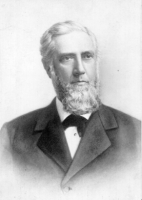
Jefferson Smith: freed by filibuster

Image from suntimes.com

Americans accused of a crime or malfeasance are innocent until proven guilty, but inevitably the very fact that a person is being accused leaves a stain on their image. When Jefferson Smith, an independent Senator from the state of Capra, was charged with misusing his office for personal gain after only a matter of months in the position, the case against him seemed open and shut. It was only after a grueling test of endurance that Smith was vindicated, proving that he was not only innocent but a model for good government.

Smith was born in May of 1908 in Jackson City, Capra. After his graduation from high school, he worked in a printing office for some time before joining the Civilian Conservation Corps. The service was a perfect match for a man who grew up loving the outdoors, and he concluded his long days of planting trees and fish stocking to read books on nature and conservation. With the support of friends and investors, Smith launched two ventures. One, an organization called The Boy Rangers, provided nature workshops, camping outings, and other activities to introduce young men to the outdoors. The other, a magazine entitled Boy's Stuff, featured articles by Smith and contributions from his fast-growing group of readers. He became a hero to boys across the state, and his status was further solidified when he and a group of Boy Rangers fought tirelessly to snuff a wildfire around the town of Sweetwater. Smith and the group were camping nearby when the fire broke out, and they were honored for saving lives and property from the blaze. Smith was also a student of history, and enlightened his proteges with the inspiring speeches of the Founding Fathers and other renowned American figures.

Smith was perfectly happy with his lot in life when Republican Senator Sam Foley died in October of 1939. The decision of who would replace Foley fell to Republican Governor Hubert "Happy" Hopper. The Governor was so nicknamed for his enthusiastic demeanor, and it was with a wide grin that he announced his choice for a replacement: Horace Miller. The crowd assembled for the press conference dissolved into an uproar. Miller was decried as a stooge of real estate tycoon and party boss Jim Taylor. Foley had always voted in line with Taylor's interests, and there was no reason to believe that Miller, a land speculator firmly in Taylor's pocket, would perform any differently. Abashed, and concerned for his own approval ratings, Hopper put the nomination on hold. Democrats promptly offered up their candidate, a former Progressive congressman named Henry Hill.

Hopper was used to falling in line with Taylor's wants, but the upheaval at the press conference made him terrified that putting Miller into office would send him out of office at the next election. By contrast, naming Hill would surely lose him Taylor's backing. At the urging of his children, Hopper chose a third path and surprised the state by choosing Smith. Both Democrats and Republicans shied away from criticizing Smith due to his popular status in Capra. Taylor, at first outraged that Hopper had defied him by naming a "squirrel chaser" to the seat, was mollified when he decided he could mold Smith into another cog in his machine. The state's other Senator, a Republican named Joseph Paine, happened to be Smith's deceased father's best friend. He was also firmly in Taylor's pocket. He promised Taylor that he would be able to manipulate Smith with ease.

Unaware of Paine's machinations, Smith caused the Senator a bit of discomfort at a dinner held following the nomination by recalling his father saying, "Joe Paine was the finest man he ever knew." It so happened that Smith's father, the publisher of a small newspaper, was murdered after his publication vociferously supported the rights of a single miner over a powerful syndicate. In his speech, Smith went on to declare, "I don't think I'm going to be much help to you down there in Washington, Senator. I'll do my best. And with all my might, I can promise you one thing: I'll do nothing to disgrace the office of United States Senator."

Upon his arrival in Washington, D.C., he was so awed by the monuments to the nation's leaders and government that he briefly went missing on a self-guided tour. The incident did nothing to improve his image in the minds of reporters. The capital's newspapers took the opportunity to mock Smith as a bumpkin unfit for the job, often printing little of the introductory interview aside from photos of him demonstrating his nature know-how with mocking headlines. The coverage was enough that Senator Pierre Barnes, a Louisiana Democrat, questioned whether Smith was fit for the job since his "astounding and shameless performance for the newspapers" brought his rank "down to the level of a sideshow entertainer."

The barb was the only one directed against Smith that day, and he was swiftly sworn in after a curt defense by Paine. Smith recalls that he confronted the members of the National Press Club (and took swings at quite a few of them), but that they also let him in on the unsettling fact that he would be perceived as little more than a second vote to whatever Paine decided. When he told Paine of this concern, his colleague encouraged him to propose a bill in support of his novel idea: a National Boys' Camp, basically an extension of the Rangers to allow young men to experience nature and learn about the nation's history. Smith followed through on the recommendation, to the laughter of Senators amused by Smith's nervousness but the terrific applause of Boy Rangers who had made it to appear in the galleries. He proposed that the government could make a loan for the project, to be repaid by the contributions of boys across the country who would donate whatever nickels or dimes they could. The bill also stipulated that the camp would be situated on the headwaters of Willet Creek.

Smith happened to be out of the Senate, being wooed by Paine's daughter, when the Senate took up discussion on a deficiency bill. A wide-ranging act to provide funding for public works projects, it also called for the creation of a dam at the exact spot where Smith hoped to build his camp. The bill itself had been heavily influenced by Taylor, who was hoping to award the construction bids to some of his closest political allies. Paine, who supported the bill, had reluctantly sent his daughter to seduce the greenhorn Senator away from his duties. It was only by the intervention of Clarissa Saunders, Smith's chief of staff, that Smith found out about the dupe.

Smith questioned Paine on why the dam wasn't going up in a place where the water would do more good. He also became more suspicious of Taylor, realizing that the appropriation for the dam may have been specifically to benefit the man. Thinking Paine could not be trusted to control Smith, Taylor came to Washington to meet with Smith one-on-one. Taylor bluntly told Smith that he could ensure his political destiny if he agreed with his agenda. It was a rather foolish move in light of the fact that Smith was in Washington for moral reasons.

Determined to expose the corruption, Smith asked to be heard on the $45 million appropriation for the Willet Creek dam in the deficiency bill. He yielded the floor after he was interrupted by Paine, who stunned the Senate by declaring that Smith was not worthy to hold office. Smith, Paine charged, had proposed to build the National Boys' Camp on land he had owned all along. Expecting to expose Taylor's graft, Smith suddenly found himself on the defensive, with Paine openly charging that he was using his office to "legalize an outrageous profit for himself out of the purchase of that land through the nickels and dimes scraped together by the boys of this country."

The matter went before the Committee on Privileges and Elections, where the evidence against Smith was compelling. Kenneth Allen, the owner of the land at Willet Creek, told members that Smith had held camping outings there for many years. He also said he had agreed to deed the land to Smith after the Senator promised he could flip it for a substantial profit and split the money with him. The committee also heard from Governor Hopper, the Register of Deeds of Jackson County, and Senator Paine. All testified that the purchase had taken place, or that Smith had some interest in the land. Paine even said that the placid Senator had raged at him to move the dam when told about the deficiency bill, and that he had found out about the land transfer afterward. A handwriting expert testified that the signatures on documents recording the transfer belonged to Smith. Irked, Smith simply walked out of the committee hearing without saying a word.

The committee promptly recommended the expulsion of Smith, and the next time the Senator spoke in the Senate chamber it was to defend himself against the charges. He managed to gain the floor by becoming the first Senator to speak on the motion, and didn't stop speaking on the issue until over a day later.

Encouraged by Saunders, both before the discussions and from the Senate galleries, Smith showed that he had become quite familiar with the rules of the chamber. He rebuffed attempts by Paine to regain the floor, and assailed the deficiency bill as a graft-riddled fraud. When Paine questioned why he could not have given a defense before the committee, Smith roared back, "I have no defense against forged papers!" He also related his account of Taylor making an offer to keep him in office, which Paine disputed by saying he and Taylor had simply urged Smith to resign in light of the evidence against him. Paine said he felt Smith was insinuating that he was involved in corrupt practices, and declared himself so offended of his "contemptible" counterpart that he walked out of the chamber. After Smith said he would not yield the floor unless both the deficiency bill and expulsion resolution were stayed to give him a week to return to Capra and work things out.

The other Senators showed their scorn by walking out as one body, but Smith promised he would keep up a filibuster. He also managed to get the Senators back into the chamber by calling for the sergeant-at-arms to compel a quorum. As Smith began his long monologue, he alternated between a defense against the corruption charges, criticism of the deficiency bill, and patriotic discussions of the nation's ideals.

The press in Jackson City and other areas of Capra was merciless. Backed by the Taylor machine, they accused Smith of holding up funding for numerous essential public works projects and other essential services to defend his own selfish interests. A spirited defense of Smith came from an unexpected source. The small printing press which produced Boys' Stuff was swiftly converted to a political organ, and it proclaimed Smith innocent. The periodical saw some distribution, but the Taylor forces resorted to reprehensible means to silence them. Public rallies in support of Smith were broken up by the police, and Boy Rangers holding shows of support for Smith were violently attacked. The outbursts, coupled with the later events in the Senate, ultimately led the Taylor machine to collapse in a hailstorm of public contempt.

In Washington, Smith's filibuster ground on past 23 hours. The other Senators, initially ignoring Smith and doing their best to whittle away the time, seemed to become more uncertain of his guilt as the exhausted Senator refused to give up the fight. "There's no place out there for graft, or greed, or lies, or compromise with human liberties. And if that's what the grown-ups have done with this world that was given to them, then we'd better get those boys' camps started fast and see what the kids can do," he said. "And it's not too late, because this country is bigger than the Taylors, or you, or me, or anything else. Great principles don't get lost once they come to light. They're right here; you just have to see them again!"

However, Smith's faith in his home state seemed misplaced when Paine delivered thousands of telegrams to the Senate floor demanding that Smith yield. Visibly distraught as he took up and perused the papers, Smith nevertheless vowed to continue even in the face of the opposition, which he denounced as "lies." Instead, he collapsed soon after of exhaustion.

That may have marked the end of Smith's effort for good government but for what happened next. Several gunshots rang out in the hall outside the Senate. Soon after, Paine ran back into the chamber, shouting that Smith's accusations were true and demanding that he be expelled instead. Consumed with guilt over his complicity in the frame-up, Paine had tried to commit suicide but was restrained by other Senators in the hall. The Senate retired for the day, and the deficiency bill was promptly returned to committee for extensive revisions. The expulsion resolution was also taken up, and unanimously defeated. Paine, hospitalized for exhaustion, resigned the same day. He died in 1967.

Hopper promptly took credit for appointing a man as exemplary as Smith; he vowed to support other such men in Congress and rid the state of its Taylor machine. Though the declaration was clearly another example of Hopper swaying to whichever end public opinion favored, he made good on his promise and remained a steadfast Smith supporter. Smith pondered leaving the Senate to return to his work with the Rangers, but bowed to the Capra chorus for him to keep up the good work in Washington. It wasn't long before he married Saunders, the woman who had helped him carry out his famous feat. He easily won election to a six-year term when the seat was opened again in 1942, and remained in office until resigning in 1960 to take up the reigns at the National Boys' Camp he had helped to establish. While in office, he became an outspoken proponent for clean government and conservation. Smith died in Jackson City in July of 1997.

Sources: The Biographical Directory of the United States Congress, "The Boy Rangers" in the Jackson City Star on May 3 1939, "Smith Shuns Spotlight" in the Jackson City Star on Aug. 6 1939, "Happy Pick Assailed" in the Jackson City Star on Oct. 14 1939, "Democrats Propose Hill For Foley Seat" in the Washington Herald on Oct. 16 1939, "Ranger Named To Senate In Surprise Pick" in the Jackson City Star on Oct. 18 1939, "First 'Whiff' Of Washington" in the Washington Herald on Oct. 23 1939, "Smith Proposes National Boys' Camp" in the Jackson City Star on Nov. 5 1939, "Paine Accuses Smith Of Land Fraud" in the Washington Herald on Nov. 12 1939, "Smith Walks Out Of Committee Hearing" in the Jackson City Star on Nov. 14 1939, "Witnesses Testify Against Smith" in the New York Times on Nov. 14 1939, "Filibusters In The Senate" in the New York Times on Nov. 17 1939, "Smith Charges Graft, Seizes Floor" in the Pittsburgh Press on Nov. 17 1939, "Stubborn Smith Stalls Bill" in the Jackson City Star on Nov. 17 1939, "Dramatic End To Smith Filibuster" in the New York Times on Nov. 18 1939, "Smith Charges Thrown Out" in the Washington Herald on Nov. 19 1939, "Paine Resigns" in the Jackson City Star on Nov. 19 1939, "Smith Elected In Landslide" in the New York Times on Nov. 8 1942, "Smith To Leave Senate, Lead Camp" in the Jackson City Star on Jun. 20 1960, "Jefferson Smith, Champion Of Clean Government, Dead at 89" in the New York Times on Jul. 3 1997, One Man by Jefferson Smith, The Lady on the Capitol Dome by Doris Kearns Goodwin, Senator Smith by David McCullough, Ethics in the Senate by Michael Clifford, Jackson City Notables by John Herbert

Thursday, March 18, 2010

Arthur Brown: second time unlucky

Image from historytogo.utah.gov

By some reports, the dissolution of Arthur Brown's first marriage was punctuated by a gunshot. Unlike his later brides, not much is known about his first wife. Even her name is only recorded as L.C. Brown. Eventually, Arthur Brown took a shine to another woman: Isabel Cameron, the daughter of a state senator. It wasn't long before he deserted his family in favor of this new flame. In some versions, the move so enraged his first wife that she tried to shoot Cameron; in others, she confronted Brown in his law office and actually managed to fire a bullet, though it missed and Brown was able to take the gun away from her.

These alleged confrontations came to light in the wake of an incident that occurred a few decades after Brown's first breakup. Once again, a member of the fairer sex was upset with him because he was canoodling with someone else. But this time, the scorned woman had a better aim.

Brown's first relationship troubles took place in his home state of Michigan. Born in March of 1843 in Schoolcraft, he left for Ohio to attend Antioch College. He graduated in 1862, and went on to earn a legal degree from the University of Michigan. After his admission to the bar, he began practicing in Kalamazoo with a focus on mining and criminal law. When he walked out on his first wife, Brown was denounced by hundreds of his friends and associates. He married Cameron after his first wife divorced him, but with his reputation in Michigan broken he left the state in 1879 and relocated to Salt Lake City in Utah. He was later described as a "Gentile in faith, but a Mormon in practice."

Brown had some ambitions to be a U.S. District Attorney, but he settled for a private practice after that appointment failed to materialize. He eventually became a millionaire and well-known enough that he was chosen to represent Utah in the Senate after the territory became a state in 1896. The other Senator chosen, Frank J. Cannon, was picked for a term running through 1899. Brown's term was shorter; he was to begin in January of 1896 for a term ending in March of the next year. He didn't make much of an impact in Washington in this short time. Brown's profile in contemporary newspapers mostly focused on his steadfast opposition to the free silver movement despite its popularity in the West. "He has no consideration for anything that stands in his way, and the Senatorial courtesy is likely to receive many rude shocks," the New York Times said in their unflattering assessment. "He is an intense, bitter partisan with no sympathy for any one who does not share his view on general politics or on silver. Always pugnacious, he would be willing to take up any gauntlet." The Times also reported that there were irregularities in the Republican caucus that chose Brown, but the appointment was never seriously challenged.

Brown opted not to run for re-nomination at the end of his term and resumed practicing law. However, his foray into politics resulted in consequences that rippled through the rest of his life. At the 1896 Republican National Convention in St. Louis, he met Annie Maddison Bradley, a woman 30 years younger than him. Bradley worked as a clerk at the Salt Lake Water Works Department, and from 1900 to 1902 she was a secretary of Republican State Committee in Utah. Brown and Bradley began an affair, which seemed to have more downs than ups. Bradley was fairly open about her dalliances, telling her husband Clarence that the son she had borne in 1900 did not belong to him. Clarence responded by turning to the bottle and then leaving to work for a railroad in Nevada; there, he developed a gambling problem, embezzled from the company to compensate, and ultimately served 18 months of a two-year prison sentence. In September of 1902, Brown filed for divorce from his second wife. Isabel said that Brown abandoned her on the first of that month, and she hired a private investigator to find out what he was up to. For a time, he and Bradley had lived in Grand Junction, Colorado, but they had returned to Salt Lake City to take up rooms in a boarding house. Isabel was not keen on divorce, since she intended to be presented at court in England and divorced women were forbidden to enter there. Instead, she gladly accompanied police to the house to watch them arrest Brown and Bradley for adultery.

This action caused the love triangle to become a sensational public matter. Brown paid his own $500 bond as well as the bond for Bradley. There was a bit of a mix-up in her release, as she was sent out before a judge had officially approved the bond. She wasn't much of a fugitive; she wound up in jail four months later on the same adultery charge, and was ultimately arrested at least four times for the crime. At one point, Brown angrily confronted the police, accusing them of harassing Bradley and acting like cowards by sending out sizable forces to detain her. Brown himself racked up a similar record. In February of 1903, he was jailed after failing to pay a temporary $150 a month alimony to Isabel; he vowed to fight the order until it wound up in the Supreme Court. By October, he was under bond again for improper relations with Bradley, and the next month he was again bonded for $500 for adultery.

Isabel said the affair began about one year after the 1896 Republican National Convention, and details of fiery confrontations between the two women in Brown's life began to emerge. It was suggested that Isabel and Bradley had brawled at one point, with Isabel striking Bradley with a horsewhip. At another point, Isabel interrupted Brown and Bradley's attempt to get away to a hotel in Pontacello, Idaho. There, Isabel grabbed Bradley by the throat and threatened to kill her. In response, Brown gave Bradley a revolver to defend herself against his wife. It was also said that Bradley had accompanied Brown to court every day during a murder trial.

It soon became clear that Bradley was intent on getting Brown to marry her. Isabel blamed Bradley's "hypnotic influence" over her husband for his actions, saying she had repeatedly urged him to divorce her. "Tear up your Brigham Street home," Bradley demanded in one letter produced by Isabel. "I am sick and tired of your dallying. The longer madame stays there the more strongly entrenched is the enemy. You haven't the courage to strike the blow you promised me to strike." Isabel also produced a written statement she had taken from her husband after an incident in which he called her "my bitterest enemy" and vowed to get a divorce. She said he had sent her a letter giving over their house to her and asking that the possessions by divided up according to ownership.

Brown disputed the claims when Isabel tried to get a settlement. Isabel said that Brown owned property in Utah, Idaho, Michigan, and Missouri valued at $291,248, that he had already named Bradley as a beneficiary in his will, and that he would try to hide his assets. She said he made a respectable $1,000 a month from his legal practice, while she earned a mere five dollars a month renting property. She asked that she be given ownership of the house, as Brown had apparently done with his letter, as well as a monthly stipend of $370 for the rest of her life. She won the temporary alimony which Brown refused to pay. Meanwhile, Bradley threatened in October of 1903 to plead guilty to two adultery charges against her and thus take Brown with her to jail unless he finalized the divorce and married her. By this point, she felt Brown had made peace with his wife, but also claimed that Brown had begged her not to enter the plea and promised he would get a divorce. Bradley pleaded anyway, but Brown managed to argue that the charges against him should be quashed because his wife should not be able to testify. The court agreed, and Bradley went to jail as Brown went free.

The scandal gradually faded away, but the relationship between Brown and Bradley resurfaced dramatically on December 8, 1908 at the Raleigh Hotel in Washington, D.C. Brown had traveled to the city to represent the St. Louis Mining Company in a lawsuit against the Montana Mining Company. A maid heard two gunshots and rushed to get the manager, who found Brown sprawled out on the floor and Bradley standing nearby. "She shot me," Brown proclaimed simply. The manager performed initial treatment, namely giving Brown a stiff drink of brandy, and ordered Bradley to leave. "I will remain here," Bradley replied. "I am the mother of his two children."

Bradley was arrested as Brown was rushed to a hospital. He had been shot twice with a .38-caliber handgun, which the manager found in the room. One bullet had grazed his hand, and the other one ended up in his abdomen. The New York Times was optimistic, writing that the former Senator was in critical condition but recovering. The Pittsburgh Press immediately headlined their article by saying Brown had been shot "fatally." The assessment was premature, but turned out to be correct. Four days later, Brown died of kidney damage aggravated by the shooting. He was returned to Salt Lake City for burial.

Bradley proved surprisingly chatty in the days after the shooting, and spoke with the press on a few other occasions in the lead-up to her trial on a charge of murder. She caused a bit of a stir by calling up George Sutherland, a Republican Senator from Utah, after the shooting but said she simply knew him from her days in the newspaper business. She said two of her four children had been fathered by Brown, and that she wanted him to marry her to make them legitimate.

When Brown went to Washington, Bradley thought the nation's capital would provide a nice place for a quiet wedding away from Utah. Brown had thought to send Bradley to the other half of the country; before he left, he bought her a railroad ticket to California. She exchanged it in order to go to Washington, found out where Brown was staying, and took a room. She later confronted Brown in his quarters, and found that he had several letters in his room from Annie C. Adams, the mother of a famous Utah actress. Bradley said she she demanded a marriage, and that Brown had started to walk out. Enraged, she had opened fire.

Bradley was met with a fair amount of sympathy. Brown refused to speak to prosecutors before he died, and the hospital superintendent said he had promised not to press charges if he recovered; one of Brown's sons insisted that a a criminal trial take place, saying it was what his father would have wanted. Adams confirmed that she and Brown had gotten engaged, and that he hoped to make an amicable break with his mistress. Despite the fact that Bradley had taken the life of her future husband, Adams harbored no hatred toward her. "If I could have seen her I am sure I could have prevented this terrible thing from happening," said Adams. "I never met her in my life, but I have a good deal of sympathy with her. I am sure now that she realizes what a terrible mistake she has made." Public opinion of Brown took another dive when it was found that he had explicitly excluded Bradley and the two children she claimed were his from his will. "That man heaped such indignities upon me that, disgraced, robbed of everything a woman holds dear in this world, and refused amends, there was nothing left for me to do but kill him, to wipe out the stain of shame and disgrace he had placed on my life," Bradley said a few weeks before her trial began in November of 1907.

With such open admissions, Bradley's lawyers could only hope for acquittal on a technicality. At first, they said they would argue that the killing was justified under "unwritten law." They settled on the argument that Brown's persistent mistreatment of Bradley had led to pent-up emotions and finally an outburst of homicidal insanity after the snub at the hotel. Brown, they said, was essentially responsible for his own death by triggering these emotions.

Prosecutors contended that Brown's death had been premeditated, and that Bradley had made the trip to Washington with the intent of committing murder. The trial ended up turning into an indictment of Brown's character. Bradley said Brown had been a heavy drinker, and their relationship had suffered for it. They argued frequently, and on one occasion she knocked several of his teeth out with an umbrella. She testified that Brown had strung her along with empty promises of marriage. Isabel died in August of 1905, and Bradley had divorced her husband and pushed hard for matrimony since her passing. She said Brown promised in June of 1906 to marry her, and had made another reassurance as late as October of that year. Some jurors teared up at her words. A doctor who took the stand expressed such contempt for Brown that the judge rebuked him.

The trial also introduced letters exchanged between Brown and Bradley, wherein Brown referred to her with terms of endearment such as "little mint julep." In the correspondence, Bradley berated Brown for seeing "that actress" and frequently insisted on seeing him, points which prosecutors said bolstered their argument for premeditation. The judge instructed the jury to find Bradley not guilty by reason of insanity if they determined that she was not capable of understanding her actions or distinguishing between right and wrong. He gave the caveat that if the shooting was "inflamed by rage, jealousy, revenge, or any other passion," it would reduce the severity of the crime but not fulfill the requirements of an insanity defense.

A single juror held out for a guilty verdict for some time, but eventually gave in. Thus acquitted, Bradley returned to the West to live with her sister in Nevada. In an unfortunate epilogue, the son whom Bradley claimed was Brown's and carried his name also inherited his mother's homicidal tendencies. In 1915, he stabbed Bradley's other son to death during a trip in Nevada. The dispute started over the question of who would cook and who would wash the dishes. Bradley herself held a variety of jobs before opening an antique store. She died in November of 1950.

Sources: The Biographical Directory of the United States Congress, Utah History To Go, "Utah's Senators Named" in the New York Times on Jan. 16 1896, "Brown May Lose Senatorship" in the New York Times on Jan. 17 1896, "Utah Ex-Senator Sues For Divorce" in the New York Times on Sep. 29 1902, "Lawyer Brown Under Arrest" in the Deseret News on Sep. 29 1902, "Suit Against Arthur Brown" in the Deseret News in Nov. 20 1902, "Ex-Senator Sent To Jail" in the New York Times on Feb. 6 1903, "Brown Will Appeal The Case" in the Deseret News on Feb. 28 1903, "Mrs. Bradley Makes Threat" in the Quebec Daily Mercury on Oct. 1 1903, "Local Briefs" in the Deseret News on Nov. 12 1903, "Ex-Senator Shot By A Woman At Capital" in the New York Times on Dec. 9 1906, "First Wife Shot At Brown" in the New York Times on Dec. 9 1906, "Woman Fatally Shoots Former Utah Senator" in the Pittsburgh Press on Dec. 9 1906, "Senator Brown Dead" in the Lewiston Saturday Journal on Dec. 13 1906, "Arthur Brown Claimed By Death" in the Deseret News on Dec. 13 1906, "Mrs. Adams Was Engaged" in the New York Times on Dec. 16 1906, "Mrs. Bradley Is Not Surprised" in the Pittsburgh Press on Dec. 23 1906, "Mrs. Bradley Tells Why She Shot Brown" in the Arizona Journal-Miner on Nov. 7 1907, "Mrs. Bradley's Tale Makes Jury Weep" in the New York Times on Nov. 20 1907, "Knocked Out Teeth" in the Spokane Daily Chronicle on Nov. 21 1907, "Bradley Defense Rests" in the New York Times on Nov. 27 1907, "Emotional Appeals To Bradley Jurors" in the New York Times on Dec. 1 1907, "Mrs. Bradley Not Guilty" in the Reading Eagle on Dec. 3 1907, Maude Adams: Idol of American Theater 1872-1953 by Armond Fields

Tuesday, February 23, 2010

Nehemiah G. Ordway: doubling Dakota

Image from history.nd.gov

The town of Yankton, South Dakota, is one of the southernmost communities in the state. Tucked away near the borders with Nebraska and Iowa, Yankton was also the capital of the Dakota Territory when it existed as one large entity. It was thanks in part to the actions of Nehemiah G. Ordway, a Governor of the territory, that the country has two Dakota states and Yankton has been left not as a state capital but only as the seat of a county bearing its name.

Under Ordway's administration, the territory was swollen with thousands of settlers. Between 1879 and 1884, the population more than doubled. The question wasn't if Dakota would be admitted into the Union, it was whether it would be admitted as a single state or two. The consensus seemed to be that Yankton was located too far south to adequately cater to the vast territory, especially with settlement occurring throughout. But it was also thought that the question of whether the capital should be moved would wait until it was decided how many states would be made out of Dakota.

So it was quite a surprise when Ordway, a single-state advocate, initiated the process for a capital move before the statehood question had been resolved. In 1883, he created a nine-member commission to study the feasibility of moving the government offices elsewhere. Even creating the commission was something of a task. There was enough opposition that Ordway only secured passage in the legislature by threatening to veto consideration of communities whose members did not support the study. Eventually, it came to pass that the requirements for the new capital were pretty basic: a parcel of land, $100,000, and a location more central to Dakota.

As in Idaho, the prospect of the capital leaving its original location was met with a great deal of hostility. In the Dakota case, however, the anger arose from the seemingly transparent graft involved in the effort. Three of the commission members were affiliated with the Northern Pacific Railroad, including Alexander McKenzie, a political agent of the railroad and sheriff of Bismarck. Ordway was further influenced by Henry Villard, the president of the railroad. As the removal process went forward, Bismarck was considered for the new capital, and it just so happened that the town was located right on the Northern Pacific line. Across the territory, newspapers and "indignation meetings" denounced the proceedings as corrupt, with one meeting in Sioux Falls vowing to ask the President or House of Representatives to get rid of Ordway. "Individually, we were in favor of removal of the capital," one newspaper said, "but wanted to see it done honestly and in the interest of the territory."

Twelve different towns made a bid for the capital, but the circumstances (and perhaps some bribery) had essentially determined that the capital would go to Bismarck. The town received the honor after offering $100,000 and 320 acres of land, a cash bid equal to the other towns but a land bid twice as large as most of them. At one point, a meeting had to take place in Yankton as part of the removal process, but citizens there managed to get a court order to prevent it. Ordway and the others involved in the process managed to subvert it by holding the meeting on a rail car passing through the town, achieving the necessary requirements while at the same time not quite violating the order. Ordway established the Capital National Bank in Bismarck and began overseeing the construction of a capitol building in Bismarck, as well as public buildings such as an insane asylum, universities, and schools. The territory's split was foreshadowed by the flat out refusal of some of the government offices to leave Yankton. The treasury and supreme court were among those that stayed, essentially dividing the duties of the territory between two different capitals.

Dakotans in the southern portion of the territory were so disgusted by the removal efforts that they created the Dakota Citizens League, and in September of 1883 they held a constitutional convention in Sioux Falls to create a document exclusively for a South Dakota. The constitution was approved, but only 40 percent of the territory's voters bothered to show up to do so. Congress was not impressed, and didn't approve it. Another attempt in 1885 was made, along with an unsuccessful effort to get the capital moved from Bismarck to the present day South Dakota capital of Pierre. The turnout was similarly light, but the House of Representatives passed the constitution. Afraid that two states would upset the congressional balance by inflating the Republican count, however, the Senate turned it down. Finally, in the 1888 elections, the Republican Party turned the Dakota statehood into a campaign issue. In February of 1889, Congress passed an enabling act and, after further revisions to the constitution, North and South Dakota were admitted into the Union in December. So in his questionable actions regarding the capital removal, Ordway had brought about a result he personally disfavored but his party supported.

As was the case in numerous western territories, the residents also took something of a dislike to Ordway because he'd been brought in from out of the area. Born in Warner, New Hampshire in November of 1828, he was elected sergeant of arms of the New Hampshire house of representatives in 1855. The next year, Ordway was returned to the position and earned another two appointments: assistant clerk to the house and high sheriff of Merrimac County, a position he held for five years. In 1857, he was named marshal and tax collector of Concord. He resigned the office in 1861 after he was appointed postal agent for the New England states. Ordway also pursued financial interests, establishing the Kearsage National and Savings Banks in his hometown.

He was commissioned as a colonel in 1862, and the next year he was elected sergeant of arms for the House of Representatives for the first time. He spent 12 years there, and served several terms in the New Hampshire legislature between 1875 and 1880. Finally, Ordway took part in a constitutional convention that established major changes to the state's tax system.

Ordway was appointed Governor of the Dakota Territory in 1880 by Republican President Rutherford B. Hayes. Recognizing that Dakota soil was well-suited for growing a diverse variety of crops, Ordway arranged for a rail car of the territory's agricultural products to tour the fairs and locales of the eastern states. He was also faced almost immediately with a crisis, as heavy snows during the winter of 1880 to 1881 led to a massive spring melt and devastating floods. Though he was out of the territory at the time, he sought to raise $100,000 to go toward the ongoing relief efforts. A hefty study entitled History of Dakota Territory was hardly charitable to Ordway, but conceded that he had done well in the appointment of W.H.H. Beadle as territorial superintendent of public instruction. In fact, the authors claimed they could find not one thing amiss with the administration of education in Dakota. They said that in 1884-1885 the territory was spending more on education than 22 states and had a schoolhouse for every 151 residents, a better proportion than 21 states.

The general consensus, unfortunately, was that Ordway was an easily corruptible Governor. He had gotten into office with the support of New Hampshire land speculators, and later gave one of his associates from that state the lucrative contract for a Sioux Falls penitentiary. He gave his son the well-paying position of territorial auditor. He spent a great deal of time outside of Dakota, acting as something of a representative to Washington even though that role was already taken by the territorial delegate to Congress. This delegate, John B. Raymond, refused to introduce a bill for single statehood because he had come to office promising division. In retaliation, Ordway and his supporters managed to get Raymond's nomination overturned at the Republican Territorial Convention. He was also criticized for vetoing dozens of bills for the construction of public buildings during the 1881 legislative session, but letting thousands of bills of questionable importance through in 1883.

By the time Ordway's appointment was coming to a close in May of 1884, petitions had started to pour into the White House begging Republican President Chester A. Arthur to give them a different Governor. Their wishes were soon met by a new, more solid controversy that erupted not long before Arthur had to make up his mind on the appointment. Under territorial law, counties could petition for organization after sending the signatures of fifty residents to the Governor; the Governor could then appoint commissioners. After that point, the commissioners would assume the appointment of county officials and other matters, including where to locate the county seat (a process the Governor was not supposed to have a role in).

Several accusations about shoddy practices in the process came to light. It became apparent that the organization of counties was largely corrupt, with people forced to give cash or land to influence the appointment of commissioners who would favor their town for the county seat. Ordway was said to have rescinded the appointment of a commissioner in Hyde County upon realizing that the man wouldn't fall in line in a vote on where to place the county seat. In another incident in Potter County in 1883, the commissioners for Potter County held a meeting about where the county seat would be located. One of the commissioners was shut out, and by the time he arrived he discovered that the seat and county officers had already been chosen. He immediately wrote to a judge, accusing one of the other commissioners of bribing Ordway to receive his appointment.

A federal investigation began, and Ordway was indicted for taking bribes to influence the appointment of commissioners in Faulk County. During the criminal proceedings, Ordway ceased to be Governor and Arthur removed him from office, naming Chicago writer Gilbert A. Pierce as the next Governor. United States Attorney Hugh Campbell sought to capture Ordway in a wide net of corrupt practices. He said the Governor had delayed the organization in Faulk County for about a year despite receiving petitions. At that point, an acquaintance of Ordway's had come to Dakota and approached the authorities in two towns hoping to receive the county seat. Both towns were told they could receive the seat if they were found to be favorable, and so they each raised land and funds for that goal. Eventually, LaFoon Townsite Company was chosen after giving half of their 440 acres and some cash to help Ordway make up his mind.

The defense employed a loophole, arguing that Ordway couldn't be punished in a criminal court because of his authority. The only punishment he could receive would be removal from office by the President, something that had already happened. The prosecution fired back that Ordway was the subject to the same criminal laws as everyone else and removal alone was insufficient. The judge agreed with Ordway's defenders, and the indictment was quashed. The acquittal did nothing to save Ordway's reputation. History of Dakota said it was unfortunate that a Governor such as Ordway was in office when such strides were being made by the territory's inhabitants. "He did little for Dakota except to stir up strife and spread abroad scandalous reports regarding the integrity of the people," the publication said.

Ordway returned east to take up business pursuits and agriculture, establishing an estate of 400 to 500 acres. He also joined his friends at the Northern Pacific Railroad, becoming a special agent with the company and leading their Washington lobby. Though it was reported that Ordway's health had been seriously impaired by his efforts in Dakota, the reports were exaggerated or he managed to recover. He survived until July of 1907, when he passed away in Boston.

Sources: The State Historical Society of North Dakota, "A Dakota Bribery Case" in the New York Times on Dec. 30 1883, History of Dakota Territory Vol. 2 by George Washington Kingsbury and George Martin Smith, North Dakota Magazine Vol. 2 Issue 2, The United States: Louisiana to Ohio by Benjamin F. Shearer, South Dakota: A Bicentennial History by John R. Milton, The WPA Guide to South Dakota, A Shovel of Stars: The Making of the American West 1800 to Present by Ted Morgan, Men of Progress by Richard Herndon

Saturday, January 9, 2010

James Brooks: out of stock

Image from civil-war.net

With the half of the country still missing at the time of the 1864 elections, the question of how to proceed with the ongoing Civil War raised the passions of the candidates and voters. The Democratic Party had split between "Peace" faction, which favored a truce with the Confederacy, and the "War" faction, who supported the effort to reunify the nation. James Brooks, a New York City candidate for re-election to the House of Representatives, fell into the former camp. During his time in Congress, he had become a proponent of peace negotiations with the seceded states. This position did not necessarily translate into support of slavery. Brooks had asked his wife to emancipate her slaves before their marriage, and he later publicly declared slavery a dead or dying institution that could not be defended.

Old-fashioned politicking played a role in the New York election as well. Tammany Hall, the Democratic machine, had nominated former congressman Thomas J. Barr to contest Brooks in the general election. The Brooks campaign offered him $5,000 if he would withdraw from the race. Barr, a War Democrat, in turn sought to get the Republican candidate, William E. Dodge, to drop out. When he was not successful, he asked for $5,000 from the Dodge campaign to stay in the race and split the Democratic vote and received $2,000. It almost worked. When the ballots were counted, Barr came in a distant third with 4,544 votes; Dodge earned 8,435, and Brooks squeaked past with 8,583. One month after his election, Brooks and his brother, Erastus, were arrested after Peter Sweeney of Tammany Hall accused them of libel in printing accusations of about Tammany interference in the election through payouts and having inspectors ignore Brooks' votes.

Brooks' new term began in March of 1865, but the election was close enough that Dodge contested it to the House Committee on Elections. His appeal charged widespread ineptitude or corruption on the part of the election inspectors. Dodge said thousands of votes from people who weren't residents of the district had been counted, soldiers' votes had been forged, Dodge's votes had been improperly rejected, public notice had not been given of registration areas or voting places, and bribery and coercion had been used throughout. Brooks said Dodge was simply using his personal wealth to try to sway the election and the district to his side. The question dragged on into 1866, when the majority report of the committee declared that Brooks was not entitled to his seat and Dodge was. In April, the matter went to the House. After unsuccessful attempts to declare the seat vacant and refer the issue back to the people or send the question back to committee, the members agreed that Brooks should no longer be seated in an 84-45 vote, with 54 abstaining; soon after, they voted 72-52, with 59 abstaining, to put Dodge in his place. Brooks' absence was short-lived, however. Dodge, a reluctant nominee, did not seek re-election after his truncated term and Brooks won the seat back in the November election.

The hiccup in his political career and almost immediate recovery give an example of the relative success Brooks enjoyed in his life. Born in Portland, Maine in November of 1810, he earned money to attend college by working as a store clerk in Lewiston. After graduating from Waterville College in 1831, he briefly studied law and taught school while frequently writing letters to the Portland Advertiser. This last activity led to his career in editing the newspaper and serving as a political correspondent in Washington, D.C. Brooks served one term in the Maine house of representatives in 1835, and, after an unsuccessful attempt at re-election, traveled through Europe and the South, continually writing back to the Advertiser to document his adventures.

Upon his return to the United States, Brooks moved to New York City and established the New York Daily Express. He served in the New York state assembly in 1847, and in the next year was elected as a Whig to the House of Representatives, winning one more term there before he was turned out in the 1852 election. During the gaps in his political career, Brooks continued with his editorial duties, and continued working on the Express for the rest of his life.

When the war was concluded, one of the most important projects in the United States was the construction of a transcontinental railroad. Unfortunately, this undertaking was fraught with corruption and greed. The Union Pacific and Central Pacific railroads, swollen with land grants, federal bonds, and state and local purchases of their stock, soon became the largest corporations in the country. In part, the project got off the ground because Thomas Durant and seven other directors of the Union Pacific bought up a defunct Philadelphia holding company and dubbed it Credit Mobilier after a prestigious French credit company. By having Credit Mobilier buy Union Pacific stock and sell it below face value, the railroad raised enough money to begin construction.

Of course, this meant Credit Mobilier was essentially a dummy organization through which Union Pacific could pay itself to collect rich dividends. The directors were well aware of this fact, and eagerly sought to increase their profits in any way possible. By being both part of the railroad and Credit Mobilier, they could not only overcharge for services but approve the faulty figure as well. The railroad further cut corners by using shoddy building materials, not paying subcontractors for work, and, most notoriously, paying laborers paltry wages for the often dangerous work. Credit Mobilier held the valuable bonds resulting from the project, while the Union Pacific's debt increased. When the two spurs linked up in Promontory Point in Utah in 1869, the railroad was $74 million in the hole while Credit Mobilier had produced some $16 million to $23 million for stockholders. The impressive accomplishment of the transcontinental route was undermined by the sub-par quality of the railroad and the unjust enrichment of Credit Mobilier. Mired in debt, Union Pacific went bankrupt in 1893.

Congress, overseeing several of the financial and other issues required to move the construction forward, was not immune from the corrupt practices. Several members had been appointed government directors of the Union Pacific, including Brooks in October of 1867. Though they were forbidden from holding the lucrative stock in companies related to the project, the temptation was overwhelming. "The members of it are in Congress; they are trustees for the bondholder, they are directors, they are stockholders, they are contractors; in Washington, they vote the subsidies, in New York they receive them, upon the Plains they expend them, and in the Credit Mobilier they divide them," journalist Charles Francis Adams wrote of Credit Mobilier in 1869. "As stockholders they own the road, as mortgagees they they have a lien upon it, as directors they contract for its construction, and as members of the Credit Mobilier they build it."

Though Adams' charge essentially outlined the Credit Mobilier problem, the issue did not explode into a full scandal until September of 1872. The New York Sun, a prominent enemy of Republican President Ulysses S. Grant's administration, published an article charging that Credit Mobilier had given 2,000 to 3,000 shares of stock to the chairmen of congressional committees related to the transcontinental railroad. The scandal broke in part because of bad blood among the Credit Mobilier group, with trustee and stockholder Henry S. McComb suing the corporation and its officers, including Republican Representative Oakes Ames of Massachusetts and former Republican congressman John B. Alley of Massachusetts, in an attempt to retrieve a signficant amount of stock he felt he had earned. The article concluded that Ames had written McComb three letters in late 1867 and early 1868, revealing that Credit Mobilier stock had been sold at a steep discount to congressmen and mostly kept in trust to hide their names. The letters also hinted that the sales aimed to influence legislation and that the stock should be put "where it will produce most good for us." The Sun implicated 12 Republican officials in the affair, including former Vice President Schuyler Colfax; Henry Wilson, a Massachusetts Senator chosen to replace him on the 1872 ticket for Grant's re-election; and Representatives James G. Blaine of Maine and James Garfield of Ohio. Brooks, who had won re-election in 1868 and 1870, was not among the names.

Coming as it did on the eve of the major election year of 1872, pro-Grant newspapers such as the New York Times accused the Sun's account of amounting to mudslinging. The Sun had indeed been highly critical of corruption during the Grant administration, and expressed its support for newspaper editor and renowned antebellum abolitionist Horace Greeley as the Presidential candidate of the Democrats and a splinter group of liberal Republicans. Though Brooks' involvement in the Credit Mobilier affair was still unknown, the Times nevertheless had harsh words for him and urged support of Republican candidate Adolphe G. Dunn. The newspaper said Brooks had been disloyal during the Civil War, shown more loyalty to Tammany Hall than the district, and that his career was "chiefly distinguished by the accumulation of a large fortune for himself." Within the year, it would be determined that this last charge had hit the nail on the head.

The Sun's accusations had little effect on the elections, which saw the re-election of Grant as well as Brooks. In December, Blaine called for an investigation into the Credit Mobilier affair, saying he wanted the "slanders" to be addressed. The House approved the formation of a committee of five attorneys led by Judge Luke Poland of Vermont. The committee called on the targeted politicians as well as representatives from Credit Mobilier, the Union Pacific, and the Central Pacific. The initial hearings were conducted behind closed doors, but certain tidbits leaked out. One involved McComb saying that Brooks had received 50 shares of Credit Mobilier stock to influence his own decisions and those of the Democrats regarding legislation about the Union Pacific railroad. Permitted to speak to the charge on the floor of the House, Brooks angrily denied the accusation. "If this charge is true, I am unfit to be a member of the House and ought to be expelled--and not only from the House, but from all association with decent men," he said. Brooks explained that his son-in-law, Charles Neilson, was the person who owned the shares and that he could produce the receipt to prove it; moreover, he said, McComb had become complicit in the crimes he was accusing Brooks of by bribing members of the Louisiana legislature to support railroad interests McComb had a stake in. "Mr. Brooks weakened the force of his explanation greatly by bringing in a great deal that seemed unnecessary, and by his bitterness toward McComb," the New York Times judged, "but his denial was very broad and very emphatic, and he left McComb a very badly impeached witness."

After the closed hearings were criticized, the proceedings were made public in January of 1873, along with transcripts from the private activities of the Poland Committee. In the same month, the House formed a second select committee to conduct their own investigation.

When the Poland Committee completed their work, they determined that Brooks had only been telling half the story in his assertion that the Credit Mobilier stock belonged to Neilson. The committee said that Brooks had spoken with Durant about acquiring $15,000 to $20,000 in stock, but no formal agreement was made. When the value of the stock increased substantially in December of 1867, Brooks again wanted a piece of the profits and sought a transfer of 200 shares. He had been made a government director of the Union Pacific railroad two months before, however, and such ownership was forbidden. To circumvent this prohibition, Brooks arranged for 100 shares of Credit Mobilier stock, $5,000 in Union Pacific bonds, and $20,000 in Union Pacific stock to be transferred to Neilson. The committee found that Neilson was not complicit in the activity, since Brooks had purchased the shares for him and Neilson immediately turned over the dividends to his father-in-law. When the Credit Mobilier stock increased by 50 percent, Brooks made the dodgy claim that it entitled him to an additional 50 shares via the agreement he had made. Even the Credit Mobilier parties were skeptical of the assertion, but Brooks ended up receiving the bonus.

Neilson admitted receiving an additional 50 shares, but denied that Brooks had ever received dividends on the stock. The committee did not believe there was sufficient evidence showing that Brooks was merely a third party, however. It discovered that Neilson had given Brooks $9,000 in dividends in June of 1868, ostensibly to repay Brooks for $10,000 that had been advanced for the purchase of the 100 shares of Credit Mobilier stock. This left only $1,000 left on the loan, yet Brooks continued to hold $16,000 worth of Union Pacific bonds given to him by Neilson as a security. The committee concluded that Brooks had been the proprietor of his son-in-law's funds, and had received the 50 shares of Credit Mobilier stock worth $15,000 to $20,000 worth of Credit Mobilier at a price of only $5,000.

While the Poland Committee determined that most of the people accused in the scandal had merely been indiscreet, it had different conclusions for Brooks and Ames. Brooks, they said, had knowingly defrauded the government and rather foolishly tried to hide the benefits of the stock while still managing the investment and dividends. They confirmed that Ames had used discounted Credit Mobilier stock to try to bribe congressmen. In February, the committee recommended that both congressmen be expelled. Two days later, the congressional committee led by Republican Representative Jeremiah Wilson of Indiana concluded that Credit Mobilier had bilked the U.S. taxpayers and Union Pacific out of millions of dollars to enrich their directors. It recommended suing to recover the lost funds.

The matter went before the House later in the month. The congressmen proved reluctant to go forward with the Poland Committee's recommendation. The chamber voted 164 to 59 against tabling the whole matter, and agreed in a 115-110 vote to accept Republican Representative Aaron Sargent's suggestion that Brooks and Ames be censured instead. The House voted 174 to 32 to censure Brooks, and 181 to 36 to censure Ames. Some Republican members immediately apologized to Ames, saying they had voted for his censure only because they felt it was what their constituents would approve. The votes also set off a barrage of abortive resolutions to retain the Poland Committee to further investigate other members charged in the scandal, since there was some grumbling that Ames and Brooks had simply been chosen to mete out symbolic punishment to both parties. These efforts eventually burned out, and the Poland Committee was discharged.

Brooks had continued to travel throughout his life, and at the time of his censure he was extremely ill after picking up a fever in Asia. The proceedings may well have further drained the vitality from him, but he retained a bit of kick in the final months of his life. He thanked the black members of the House who had voted against his punishment, and issued a statement in March reiterating his innocence. He said the Poland Committee had ignored other testimony and exploited his illness, and once again claimed that Neilson had owned the 150 shares of Credit Mobilier stock rather than him. He died in April, and Ames followed him to the grave eight days later.

Sources: The Biographical Directory of the United States Congress, "Criminal Prosecution Of The Editors Of The Express For Libel" in the New York Times on Dec. 13 1864, "Arrest Of Hon. James Brooks" in the New York Times on Dec. 28 1864, "Washington News" in the New York Times on Mar. 27 1866, "Washington News" in the New York Times on Apr. 7 1866, "New-York Contested Election" in the New York Times on Apr. 11 1866, "James Brooks" in the Lewiston Evening Journal on Apr. 17 1872, "Dunn vs. Brooks" in the New York Times on Nov. 1 1872, "The National Capital" in the New York Times on Dec. 18 1872, "Credit Mobililer" in the New York Times on Jan. 14 1873, "Telegrams Condensed" in the Reading Eagle on Feb. 27 1873, "Ames And Brooks" in the New York Times on Feb. 28 1873, "Credit Mobilier: Mr. James Brooks Again Explains His Connection With It And Loses His Temper" in the New York Times on Mar. 8 1873, "Obituary: Hon. James Brooks" in the New York Times on May 1 1873, Nothing Like it in the World: the Men Who Built the Transcontinental Railroad by Stephen E. Ambrose, Empire Express: Building the First Transcontinental Railroad by David Haward Bain, The Reconstruction Era: Primary Documents on Events from 1865 to 1877 by Donna Lee Dickerson, Final Freedom: the Civil War, the Abolition of Slavery, and the Thirteenth Amendment by Michael Vorenberg, William E. Dodge: the Christian Merchant by William Carlos Martyn, The American Ballot Box in the Mid-Nineteenth Century by Richard Franklin Bensel, The Election Frauds of New York City and Their Prevention by John I. Davenport, The Credit Mobilier of America by J.B. Crawford, Campaign of '84 by Thomas V. Cooper, The House: The History of the House of Representatives by Robert Vincent Remini

Saturday, November 28, 2009

Harold G. Hoffman: laughing all the way to the bank

Hoffman leaves the funeral of Ellis Parker in 1940. Image from pro.corbis.com.

Late in the evening on October 17, 1935, Bruno Hauptmann received a surprise visit in his prison cell. Eight days before, the New Jersey Court of Errors and Appeals had affirmed the conviction of the Bronx carpenter and German immigrant in the "Crime of the Century." Sentenced to die, Hauptmann must have been reassured to see that his visitor was someone who could help save him: Harold Giles Hoffman, the Republican Governor of New Jersey. For over an hour, Hauptmann talked with the Governor and maintained his innocence in the crime: the kidnapping of Charles Lindbergh Jr., the infant son of famed aviator Charles Lindbergh, from his East Amwell home in 1932 and the child's subsequent murder.

Hoffman's belated involvement in the case has gained more attention than the indisputably criminal actions he admitted to later in his life. Hoffman had won the 1934 gubernatorial election, becoming the youngest governor of the state at 38 years old, and arrived in the office in the midst of Hauptmann's trial. As governor, he did not have the sole authority to grant clemency to condemned prisoners. Rather, the state had an eight-member court of pardons consisting of the governor and seven judges; a majority vote was needed to approve a pardon, and the governor had to be included in that bloc for it to go forward. When his meeting with Hauptmann became public in December of 1935, Hoffman said he was seeking to encourage the other members of the court to visit Hauptmann as well as part of their considerations regarding further action in the matter.

Hoffman also announced that Ellis Parker, a Burlington County detective who had been put on the case by the previous governor, Democrat A. Harry Moore, would be taking another look at the evidence. Parker was of the opinion that Hauptmann was innocent, but Hoffman claimed to have a different opinion. He said that while the courts had already determined that Hauptmann was guilty of the kidnap-murder, he did not believe the crime could have been carried out by only one person. At the same time, Hoffman levied criticism against key figures in the case. He charged that police superintendent H. Norman Schwarzkopf had mishandled the original investigation, while attorney general David T. Wilentz conducted a biased prosecution. On December 22 of 1935, the same day Hauptmann appealed for clemency to the court of pardons, Lindbergh and his family secretly left the country to make a home in England. The decision was probably motivated mostly by threats made against Lindbergh's other son, but the Associated Press reported that friends of the family were also dismayed by Hoffman's visit to Hauptmann and statements suggesting that the entire drama had not been unraveled. As far as Lindbergh was concerned, Hauptmann's conviction should have closed the case.

While the Lindbergh case has spurred plenty of arguments and theories about whether justice was done and Hauptmann was the person to blame, Hoffman's actions on behalf of such a notorious character soon made him extremely unpopular. When he granted Hauptmann a 30-day reprieve from the electric chair in January of 1936, there were cries for his impeachment. Hoffman defended the action, saying he "share[d] with hundreds of our people the doubt as to the value of the evidence that placed [Hauptmann] in the Lindbergh nursery on the night of the crime." At the end of month, he ordered the state police to reopen investigation, saying there was "abundant evidence that other persons participated in the crime."

An even stranger twist occurred when the pardons court received copies of a confession signed by Paul H. Wendel, a disbarred Trenton lawyer. Wendel later denied confessing to the kidnap-murder, saying it had been extracted by torture. In addition, he claimed Parker had encouraged him to sign the document because it would lead to a financial windfall and Hoffman would ensure that he would escape punishment. Hoffman denied having any knowledge of Wendel's confession, but later admitted that he'd been informed about it. Time reported that Hoffman also fought to reduce Hauptmann's sentence to life imprisonment during a closed session, but by spring of 1936 Hoffman had said no more help would be forthcoming. On April 3, Hauptmann was executed.

The governor's actions raised questions as to whether he was simply playing politics with the infamous case. It was suggested that his criticism of Schwartzkopf aimed to replace the Republican police commissioner with one of his own appointees, while also trying to discredit the Democratic attorney general. In doing so, critics posited, Hoffman would have been able to elevate his own standing in the Republican Party and make a strong bid for Vice President at the 1936 Republican National Convention. If his actions had led to Hauptmann being found innocent or another perpetrator being arrested, he may well have been hailed as a hero.

Instead, Hoffman was blasted in the press and by members of the state government. A normally mundane selection process for four New Jersey delegates-at-large to the Republican National Convention was followed closely when former congressman Franklin William Fort challenged Hoffman for one of the spaces. With the selection process taking place not long after Hauptmann's execution, Fort charged that Hoffman was receiving support from Jersey City mayor and Democratic boss Frank Hague. However, Fort focused most of his attention on Hoffman's handling of the Hauptmann matter. "No man has done more in my memory to attempt to break down the fundamental American respect for the power and dignity of our courts of justice," he declared.

Hoffman was able to defeat Fort to become a delegate, but received the lowest number of votes of the four people selected, dashing any hopes of getting onto a national ticket. The whole affair had a few notable epilogues. Attending a formal dinner opening for the National Exhibition of American Art in New York City, Hoffman didn't much like whatever Hearst reporter Lou Wedemar was saying about the governor's political future; Hoffman responded by cold-clocking the man, whom he outweighed by 80 pounds. Hoffman later wrote a series of articles on the case for Liberty magazine; among the assertions he made was that the corpse that was found was not positively identified as Lindbergh's son. In 1985, a total of 23,633 documents related to the case, including the Lindberghs' original statements to police, were found in the garage of Hoffman's former home; Hoffman had taken them for review in his own investigation and never brought them back. The discovery prompted Hauptmann's widow to sue the state for wrongful death, arguing that the documents revealed such miscarriages of justice as handwriting experts changing their opinion on whether Hauptmann had written a ransom note after talking to police and an autopsy performed by an intoxicated coroner. State officials denied the claim, saying that the documents actually reinforced Hauptmann's conviction.

Born in South Amboy, New Jersey in February of 1896, Hoffman began working as a sports reporter when he was only 12 years old. He kept up the job through his graduation from the South Amboy High School in 1913, eventually becoming sports editor for the Perth Amboy Evening Times and freelancer for the New York Times. After serving with the Army in World War I and attaining the rank of captain, Hoffman returned to his home state to become the treasurer of the South Amboy Trust Company. He later became vice-president of the bank and remained active with the organization until 1942. Hoffman also dabbled in real estate, helping found the Hoffman-Lehrer Real Estate Corporation and serving as director of the Investor Building and Loan Association.

Hoffman's first entry into politics came in 1920, only one year after he began working with the South Amboy Trust Company, when he was chosen to be the city's treasurer. He left the post five years and two terms in the New Jersey house of assembly later, when he was chosen to be mayor of South Amboy. Hoffman also worked as a secretary to Morgan F. Larson, future governor of the state, when Larson was president of the state senate. After being elected to the House of Representatives in 1926 and 1928, Hoffman was appointed motor vehicle commissioner of New Jersey in a 59-16 vote of the state legislature. The decision came in February of 1930, and Hoffman did double duty as a congressman and commissioner until his term in the national office expired in 1931.

As motor vehicle commissioner, Hoffman became an early opponent of drunk driving. In August of 1930, he told the magistrate judges in the state to end the practices of suspending sentences for driving while intoxicated cases and allowing such offenders to pay their fines on an installment plan. Hoffman held the post until he was elected governor of New Jersey in 1934. In this race, he easily won the Republican nomination, gathering more votes than the other three contestants combined, and defeated Democrat William L. Dill (the former motor vehicle commissioner) in the general election. As governor, Hoffman remained concerned about traffic safety. In December of 1935, in the midst of the controversy over his involvement in the Hauptmann case, Hoffman wrote an article entitled "Death After Dark." He said 20,000 of the 36,000 motor vehicle accidents in the prior year had occurred at night, with drivers going too fast and having too slow of a reaction time. "As a nation, we have failed to grasp the fact that as the sun goes down, so must our speed," he said. "We are simply driving too fast for our eyes."

Hoffman was a large, jovial man who loved to play the clown. He was not above dressing up in comically oversize pants or rigging up office telephones to spray unsuspecting callers with water. Over the course of his career, he put together a collection of hundreds of lucky elephant statues. Hoffman's temper could sometimes get the better of him, though. In addition to the reporter he punched out, he once tussled with a former prizefighter in Trenton.

Hoffman's intervention in the Hauptmann case largely overshadowed his other actions during his four years in office, but his other major initiative also proved unpopular. With the Great Depression still hitting the country hard, half a million residents were putting a heavy stress on the state relief program. In order to keep the program funded, Hoffman proposed a two percent tax increase on retail sales. The tax was pushed through the legislature, but proved unpopular with the majority of the Republican Party. The conservative Clean Government Group charged that support for the bill had been purchased, with 20 Hague Democrats in the legislature voting in favor of the measure after the governor promised Hague hundreds of patronage jobs. After only 117 days, the tax was overturned. The only other instance in which Hoffman received major attention during his time as governor was a near-death experience on the Fourth of July in 1937. While reviewing a deep-sea fishing fleet, an explosion in the engine room set fire to his yacht. Hoffman and the other 27 passengers were rescued by the Coast Guard.

New Jersey law prevented Hoffman from running for a second term, so in the waning days of his administration he created the New Jersey Unemployment Compensation Commission, whose friendly commissioners ushered him in as executive director. He tried again for the GOP nomination for governor in 1940, without success. He continued to serve as the unemployment commissioner until June of 1942, when he was granted military leave to return to the Army. He served overseas as a major in the Transportation Corps, and was discharged four years later as a colonel. Even during the war, Hoffman couldn't escape some of the old charges against him. In 1943, while in Trenton, he admitted that he had recommended friends for state jobs while governor, but did not consider that there had been any wrongdoing because he had not broken any laws to do so.

After returning from his service, Hoffman tried unsuccessfully for the 1946 gubernatorial nomination and resumed his post as executive director of the unemployment commission. He was later appointed by Republican Governor Alfred E. Driscoll to be director of the newly established Division of Employment Services. In the first hint of Hoffman's future troubles, there were suspicions in 1949 that a brokerage firm Hoffman had recommended had profited unfairly from bond sales to the state. He also admitted to seeking the political support of racketeer Longie Zwillman during the 1946 primaries.

In March of 1954, Democratic Governor Robert Meyner suspended Hoffman due to the discovery of financial irregularities within his department. As the investigation proceeded, it found that Hoffman had rigged bids to benefit friends, signed illegal contracts overpaying for state office space, and other errors suggesting embezzlement. In May, Hoffman gave a letter to his daughter, Ada, containing instructions to not open it until after his death. The timing was fortuitous; Hoffman passed away the next month after suffering a heart attack while in New York City.

When Ada opened the letter, she was so upset about its contents that she ended up destroying it. Before doing so, however, she had shown it to two of her father's friends, including attorney Harry Green, who urged her to reconstruct it and make it public. Ada did so, giving as a reason the assertion that Meyner and the Democratic administration had broken their promise to treat the case quietly after Hoffman's death and were "dancing on his grave." While Ada's entire recollection is only as accurate as her memory, she fired back that Hoffman had accused Meyner of complicity in the same rental-purchasing agreement with which her father had been associated.

More serious, however, was Hoffman's deathbed admission that he had stolen state funds throughout his career. He wrote that he went into debt after his 1926 congressional campaign when future Senator Hamilton Fish Kean reneged on a promise to pay off $17,000 in expenses and only gave him $2,500. With other costs mounting from keeping houses in New Jersey and the capital (and, as some have suggested, maintaining a lifestyle including lavish parties and bootleg liquor), Hoffman began drawing on inactive accounts at the South Amboy Trust Company. To cover those shortages, he had stolen $300,000 in state funds. Further investigation determined that Hoffman had elaborately juggled $15,801,197 between different state funds to make sure that theft wasn't noticeable. Hoffman said that a state official, deceased by that time, had discovered the wrongdoing and extorted $150,000 in exchange for keeping quiet; he maintained that but for the blackmail, he would have been able to repay the debt.

Hoffman declared, rather falsely, that no one had been hurt as a result of his theft of taxpayer money. He also said the awarding of jobs to friends was the result of "an almost uncontrollable urge to help other people." He urged Ada not to let her son enter the field of politics. "It is a lousy game," Hoffman complained. "In order to be elected, you must necessarily accept favors from a large number of people. If you attempt to repay them after being elected to office, it becomes wrongdoing. If you don't, you are an ingrate." Ada also recalled that the letter had a personal apology to his family. "It is a sad heritage I leave to Mother, to Hope, and to you," he said, "but I pray it may somewhat be softened by the knowledge that I do love you all so much."

Investigators confirmed the theft and also revealed lesser instances of misconduct. Hoffman was accused of depositing $3,427,000 without interest into the Trenton Trust Company, a bank run by a friend, an action that allowed the bank to earn $300,000 in five years; the bank returned the favor by putting $150,000 into a non-interest account for Hoffman at the South Amboy Trust Company. It was also alleged that Hoffman awarded one state employee $1,000 for overtime he never performed and unfairly gave 50 companies favorably low unemployment insurance rates.

Hoffman was beyond the reach of the law, but the scandal resulted in four of his aides being suspended and a fifth one resigning. His family promised to repay the stolen money, though it is unclear how successful they were in this venture. One year after the scandal, the state sued the South Amboy Trust Company for the stolen $300,000 plus interest; the suit was settled in 1958 for $176,000. As a more lasting result, the embezzlement resulted in stricter audits on state agencies to prevent such a crime from happening again.

Sources: The Biographical Directory of the United States Congress, The New Jersey State Library, "Hoffman Elected To Succeed Dill" in the New York Times on Feb. 5 1930, "Hoffman Will Hold Two Public Posts" in the New York Times on Mar. 29 1930, "Asks Drastic Curb On Drunk Driving" in the New York Times on Aug. 27 1930, "Governor Signs Repeal Soon After Passage By Legislature" in the Pittsburgh Post-Gazette on Oct. 26 1935, "Noted Sleuth Says Bruno Is Innocent" in the Evening Independent on Dec. 6 1935, "Death After Dark" in the Brownsville Times on Dec. 12 1935, "Hauptmann Denies 'Doubt Of Guilt'" in the New York Times on Dec. 19 1935, "Kidnap Threats Make Lindbergh Go To England" in the Spokane Daily Chronicle on Dec. 23 1935, "Jersey Court Unique Body" in the Bend Bulletin on Dec. 23 1935, "Reprieve Hint False, Bruno Told In Cell" in the Pittsburgh Post-Gazette on Dec. 27 1935, "Crime: Hoffman To Hauptmann" in Time on Jan. 27 1936, "Gov. Hoffman Orders Police To Resume Probe Of Evidence In Lindbergh Kidnaping Case" in the Daily Illini on Jan. 31 1936, "Kidnaping Probe Meets Turndown By Legislature" in the Evening Independent on Apr. 7 1936, "Political Notes: The Hoffman Case" in Time on Apr. 13 1936, "New Jersey: Hoffman v. Fort" in Time on Jun. 1 1936, "People" in Time on Jul. 12 1937, "Hoffman Defends Patronage Action" in the New York Times on Dec. 22 1943, "Hoffman To Direct UCC" in the New York Times on Jun. 8 1946, "Hoffman Defends Record In Office" in the Eugene Register-Guard on Jun. 25 1954, "A Death Divulges A Life Of Deception" in Life on Jun. 28 1954, "Joker's Heritage" in Time on Jun. 28 1954, "Millions Juggled In Hoffman Theft" in the New York Times on Jul. 30 1954, "Jersey Sues Bank On Hoffman Fund" in the New York Times on Feb. 11 1955, "Jersey Settles Hoffman Claim" in the New York Times on Jul. 3 1958, "Wife Says Man 'Framed' In Lindbergh Case" in the Eugene Register-Guard on Oct. 23 1985, Encyclopedia of New Jersey edited by Maxine N. Lurie and Marc Mappen, Notorious New Jersey: 100 True Tales of Murders and Mobsters, Scandals and Scoundrels by Jon Blackwell, The Lindbergh Case by Jim Fisher, New Jersey: A History by Thomas J. Fleming

Wednesday, November 4, 2009

Charles E. Bowles: another mayoral Klandidate

Source: freep.com

Hampered in large part by the sensational murder trial of David Curtis Stephenson and the widespread exposure of corruption in the Indiana government that followed, the Ku Klux Klan had lost much of its influence by 1929. Charles E. Bowles, a former Klan candidate for mayor of Detroit, won the office that year without any tangible support from the organization. Within seven months of beginning his term, however, Bowles had been kicked out of city hall.

Detroit was proving to be a popular destination for eastern and southern European immigrants during the 1920s. By 1930, 25 percent of the city's population, or about 400,000 people, was foreign-born. Bowles, who had been born in Yale, Michigan in March of 1884, was a Republican and practicing lawyer. When the incumbent mayor, John C. Lodge, announced he was too ill to complete the rest of his term, the Klan tapped Bowles for their candidate.

Bowles' opponent was a natural Klan enemy. John William Smith was a working class Catholic opposed to Prohibition; his promises included extending more rights to black citizens and putting more black police officers on the city's police force. While Smith campaigned for black and immigrant support, the Klan had failed to get Bowles on the ballot and began pushing for write-in votes. Their tactics included disturbing Smith rallies by showing up and screaming Bowles' name and burning a cross on the lawn of Smith's home. When the approximately 325,000 votes were tallied, Bowles was found to have won by 7,000 votes. However, a technicality kept him out of office. Smith challenged the result, and upon review the election commission determined that any write-in vote for Bowles that was misspelled could not count. Almost 17,000 were invalidated, and Smith settled in for a one-year term.

In 1925, Bowles again ran for mayor with Klan support. Smith again defeated him, this time by 29,787 votes out of about 250,000. The Klan had managed to put four of their five candidates on the city council, but Bowles put aside his attempts at the mayor's office and became a recorder's court judge from 1926 until 1929. In that year, he again challenged Smith, though with Klan support severely diminished or nonexistent. By a margin of 8,595 votes, Bowles was elected mayor. Smith once again demanded a recount, but this time Bowle's victory was upheld.

It wasn't exactly a good time to be coming into office. Not long before the election, the stock market crashed and the Great Depression was beginning to take hold. With welfare expenditures on the rise, Bowles asked the Detroit Bureau of Government Research to survey the problem to keep costs under control. However, differences between Bowles and the city council inhibited attempts to reduce unemployment through public works projects.

Other decisions soon made Bowles an unpopular man. In March of 1930, he announced his intention to raise the streetcar fare from six cents to eight cents despite the mounting economic problems. The suggestion was criticized so much that Bowles backed off it before it went into effect. Frank Couzens, son of Senator and former mayor James Couzens, was the sole opponent of the fare hike on the Detroit Street Railway Commission. Couzens also opposed a decision to change the railway's insurance from multiple insurance carriers to a single one, saying the commission was favoring one carrier when another had offered a lower price. Bowles responded by asking him to resign.

Though he'd come into office promising reform, Bowles' ideas of doing so were not well-received. That same month that Couzens was removed, he announced the retirement of seven veteran police officers and the formation of a citywide vice squad. Under the new framework, the unit would have jurisdiction over all vice cases in the city, where formerly they had been handled by precinct commanders. Rather than reducing vice in the city, however, the city saw an increase in gambling and other such crimes. The squad also enforced some cases more strictly than others, a practice that led to rumors that it was associated with the underworld and going easy on mobsters.

Most controversial were Bowles appointments to different political offices. His choice for employment manager of the Detroit Street Railway declared that he would give fellow members of the Odd Fellows lodge preference for hiring, and the appointment had to be rescinded after he'd held it only two days. John Gillespie, a Republican politician, was named commissioner of the Department of Public Works and was soon accused of using his position to benefit personal business projects, favor certain contractors, and begin building a political machine to work on behalf of Bowles. When the Detroit Free Press and Detroit News became increasingly critical of the administration, Bowles responded by refusing to speak to reporters, an action that only earned him more contempt.

It seemed like the only way to realize the promised reform was to act on the vice problems while the mayor's back was turned. In May of 1930, Bowles and Gillespie left the city to watch the Kentucky Derby. While they were gone, Frank Couzens turned down a chance to return to the Detroit Street Railway Commission, saying he didn't intend to serve "any mayor who would not give me a hand to perform my official duties according to my best judgment in public interest." Couzens himself later became mayor of the city from 1933 to 1938. More importantly, police commissioner Harold H. Emmons was persuaded by citizens and the press to start raiding saloons and underworld dens. While Bowles and Gillespie took in the horse race, 276 people were arrested in Detroit, many of them swiftly convicted and sentenced.

When Emmons said he intended to continue his crackdown on the vice problems, Bowles dismissed him and replaced him with Thomas C. Wilcox. Echoing Couzens' complaints that Bowles was too restrictive, Emmons said the mayor "insisted on assuming the entire responsibility" for taking care of vice problems; he said that while such a system led to "an increase in efficiency in handling of major crimes, that is, those of violence" it also caused "diminished efficiency in the handling of gambling and other vice."

Bowles denied any interference in police work, but angered citizens thought he had removed Emmons for a job well-done. The action further fueled rumor that Bowles was favoring gangsters, though Emmons said that was not the case. However, he did say that Bowles had reinstated several gambling dens while Emmons was away on a business trip. An editorial in the Pittsburgh Post-Gazette said that the failure of the government to address the vice issue was hypocrisy at best and collusion at worst. One day after Emmons was removed, a citizens' committee began gathering signatures for a recall election.

While Emmons' dismissal was the main bone of contention, the recall found plenty of other complaints to raise against Bowles. It charged that the mayor "substituted secrecy for frankness in public business," had attempted to "weld street railway and other city employees into a political machine," had "threatened the success of municipal ownership" by attempting a streetcar fare hike, and had forced Couzens off the Detroit Street Railway Commission.

The Klan found a voice in the city's politics again, charging that the recall effort was a Catholic hit job. Other supporters said the city's newspapers, most of which threw their weight behind the effort, were upset because Bowles had reduced their influence over the city. Ultimately, however, the petition had accumulated 111,270 signatures when it was filed on June 18, well above the 89,467 needed to call a special election. There may have been even more; Time reported that of about 400 lawyers collecting signatures in the city, two had their petitions seized by police. Wilcox said he wouldn't stand for such behavior by the officers.

Bowles sought to delay the election and was able to win a temporary injunction, but it was later removed. A recall election was scheduled for July 22. When the results were in, 57 percent of the voters, a majority of 30,956, favored removing Bowles from office. The idea that Bowles was colluding with the underworld grew more popular with a sharp increase in violence during the lead-up to the recall election. In a 19-day period, there were eleven murders. It was enough to draw Governor Fred Warren Green to Detroit to start his own investigation and threaten martial law.

The last of that set of murders was shocking enough that it overshadowed the result of the recall. Gerald E. Buckley, a popular radio broadcaster and well-known anti-Bowles partisan, went on the air with the election results on the late evening of July 22. He returned to the La Salle Hotel, where he was residing, and sat down in the lobby to read a newspaper. At about 1:40 a.m., three men came entered the hotel and gunned Buckley down, hitting him with 11 bullets.

Over 100,000 people attended Buckley's funeral. Many felt that they only had jobs during the Depression because Buckley had made an effort to find employment for the city's residents. Angry citizens charged that Bowles had sent hitmen to rub out Buckley as payback for his influential efforts to oust the mayor. Others thought the killing was a response to Buckley's denunciations of gambling, or his testimony in a gangland double homicide that he witnessed outside the same hotel where he was later murdered. Police commissioner Wilcox took a different approach: he said that Buckley was himself involved with the mob, and had taken part in racketeering and extortion. Though he claimed to have an affidavit accusing Buckley of receiving $4,000 from a racketeer, he was unable or unwilling to produce it for the press.

The public didn't buy it. The Detroit Times wrote a story agreeing that the motive for Buckley's murder was involvement in racketeering, and included an accusation from Bowles that Buckley had offered to change his tune on the mayor if he were paid off. In response, the newspaper was deluged by complaints, had about 12,000 people cancel their subscriptions, and lost several advertisers. Other papers blasted the slaying as a direct result of negligence in the city government. The Detroit Free Press said Buckley was dead "because the government of the city of Detroit failed to maintain a decent check on banditry and gunmen, but allowed them to think that the town is wide open and 'easy.' His blood cries from the ground for vengeance; and his death is a solemn warning to the municipal officials and to the city."

Bowles was set to continue his roles as mayor until a special election in September, and sought to remedy some of the things that had led to the recall and his own unpopularity. He denounced Buckley's murder as "a terrible thing," abolished the central vice squad, and supported more raids against speakeasies. Gillespie, whose name had come up almost as much as Bowles' in the various implications, resigned. These actions may well have been due to the fact that the recall election did not guarantee that Bowles would be removed from office; he was allowed to run in the election to try to keep his job.

Bowles put in an impressive showing at the special election, which included five contenders. When the result was called, he had earned 93,985 votes, besting by about 8,500 votes George Engel, a former civil service commission chairman who had received the endorsement of the recall committee. Victory, however, went to Democratic candidate Frank Murphy, a judge of the recorder's court, who received 106,637 vote.

Murphy's inauguration had to wait another 13 days. Bowles challenged the result, charging irregularities and fraud in the election. Some citizens responded by filing a lawsuit demanding his speedy removal. "Bowles is in by right of a valid election, the election last fall," said Charles S. Abbott, Bowles' attorney. "Nothing, we contend, has occurred since that time to put him out." Though Bowles threatened to take the matter all the way to the Supreme Court, he later ceded the election to Murphy after the City Election Commission failed to find anything that significantly affected the vote.

Three men were indicted in the Buckley shooting, and the prosecutor in the case accused them of being leaders in the vice world who had also contributed $11,000 to Bowles' campaign. Bowles had already recovered from his recall, however; at about the same time that the charge came out in March of 1931, he was nominated in a nonpartisan primary to take up his old job as judge of the recorder's court. Buckley's accused killers were later acquitted, though Time reported that two of them were immediately arrested on other charges.

Continuing his law work, Bowles also took several more stabs at different elected posts. He ran for the House of Representatives in 1932 to 1934. He lowered his sights to the state government later on, making bids for circuit court judge in 1941 and the state house of representatives in 1950 and 1952. Bowles passed away in July of 1957.

Sources: The Political Graveyard, "Klan Candidates Picked For Council" in the Ludington Daily News on Nov. 4 1925, "Police Guard Ballots Pending Recount Demand" in the Ludington Daily News on Nov. 7 1929, "Couzens Saves Himself From Being Fired Again By Declining Position" in the Ludington Daily News on May 20 1930, "Resignation Of Police Head Requested" in the Evening Independent on May 21 1930, "Citizens' Committee Formed To Circulate Petitions For Recall Of Detroit's Mayor" in the Evening Independent on May 22 1930, "Turmoil In Detroit" in Time on Jun. 2 1930, "Detroit Mayor Loses Last Suit To Halt Recall" in the Chicago Tribune on Jul. 9 1930, "The Recall In Detroit" in the Pittsburgh Post-Gazette on Jul. 10 1930, "Detroit Radio Announcer Is Shot To Death" in the Evening Independent on Jul. 23 1930, "Admits Buckley Affidavit Is False" in the Evening Independent on Jul. 25 1930, "Death In Detroit" in Time on Aug. 4 1930, "Murphy Elected Mayor Of Detroit" in the Ludington Daily News on Sept. 10 1930, "Chas. Bowles Asks For Recount" in the Ludington Daily News on Sept. 15 1930, "Bowles Is Bound To Hold On To Office Of Detroit Mayor" in the Ludington Daily News on Sept. 17 1930, "Buckley's Murder Laid To Vice War" in the Milwaukee Journal on Mar. 3 1931, "Detroit's Question" in Time on May 4 1931, The American Mayor: The Best and Worst Big City Leaders by Melvin G. Holli, Arc of Justice: A Saga of Race, Civil Rights, and Murder in the Jazz Age by Kevin Boyle, Frank Murphy: The Detroit Years by Sidney Fine, The Industrial Revolution in America by Laurie Collier Hillstrom, Detroit: A Motor City History by David Lee Poremba